

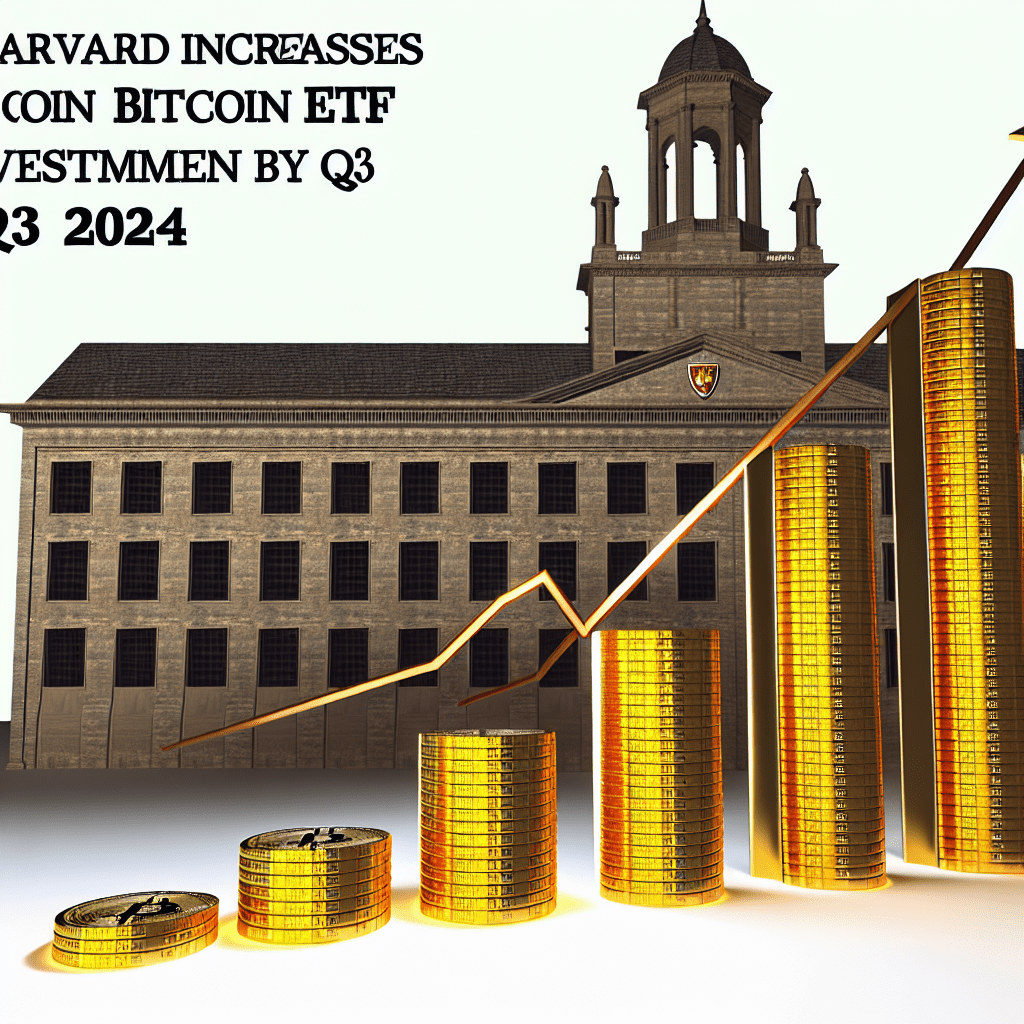

In Q3 2024, Harvard significantly increased its Bitcoin ETF holdings by 257%, positioning the iShares Bitcoin Trust as its primary disclosed asset, despite BTC’s decline and skepticism from critics.
Summary
- Harvard boosted its Bitcoin ETF stake by 257% in Q3, with IBIT now comprising approximately 0.75% of the endowment and nearly double the size of its gold ETF investment.
- This move faced backlash from academics and commentators citing Bitcoin’s price volatility, absence of yield, limited payment functionality, and significant energy consumption.
- Market analysts point out that Harvard’s investment occurs during a period of BTC ETF outflows, with many investors facing losses and a cautious outlook amid option clustering.
Harvard University has raised its Bitcoin exchange-traded fund allocation by 257% for the third quarter of 2024, making the iShares Bitcoin Trust its largest disclosed asset as of September 30, according to disclosures.
Additionally, the university increased its gold ETF holdings by 99% during the same timeframe, distributing assets to Bitcoin at a ratio of 2-to-1 relative to gold, as noted by Matt Hougan, chief investment officer at Bitwise.
The Bitcoin (BTC) holdings account for about 0.75% of Harvard’s endowment, placing the institution among the top 20 largest investors in the BlackRock-managed fund, based on available information.
The university’s Bitcoin accumulation took place before a market downturn that decreased the value of crypto assets. Bitcoin has seen a decrease since the end of Q3 on September 30.
Over the last decade, Harvard’s endowment recorded an 8.2% annualized return, ranking ninth among a comparison of 10 elite schools. For the fiscal year ending June 30, it reported an 11.9% gain, falling short of some peer institutions.
Stanford finance professor Joshua Rauh noted that investors often consider Bitcoin and gold as safeguards against global monetary system failures and the decline of the U.S. dollar. However, he highlighted that the effectiveness of either asset in providing such protection is uncertain and relies on specific scenarios.
Harvard’s Bitcoin strategy stands in contrast to earlier views from its own economic scholars. Kenneth Rogoff, a Harvard professor and former chief economist at the International Monetary Fund, had previously suggested that Bitcoin would lose significant value in a decade if regulators eliminated uses related to money laundering and tax evasion. Rogoff acknowledged that his previous assessment was overly optimistic regarding regulatory trends.
He remarked that he did not foresee a situation where regulators could control substantial amounts of cryptocurrencies without facing repercussions due to possible conflicts of interest.
MarketWatch columnist Brett Arends criticized the investment as an “environmental disaster,” observing that Bitcoin’s global computing network consumes more energy annually than some mid-sized countries. Stanford professor Darrell Duffie expressed astonishment at the investment, mentioning that Bitcoin does not yield dividends and has limited practical payment applications.
Recent market data indicates that Bitcoin has seen considerable outflows from ETF products in recent weeks. The cryptocurrency is trading below recent peaks amid weakening market sentiment.
Arthur Azizov, founder and investor at B2 Ventures, characterized the current market as lacking stability. He pointed out a disconnection with traditional markets, where broad equity indexes have risen significantly in 2024 while Bitcoin has experienced a modest decline.
Azizov noted that a substantial portion of Bitcoin is currently held at a loss, leading to selling pressure as holders attempt to exit their positions. He added that a significant volume of Bitcoin options is set to expire around crucial price levels, making traders cautious. According to Azizov, only a strong movement above recent resistance levels could rejuvenate confidence and pave the way for upward shifts.
