


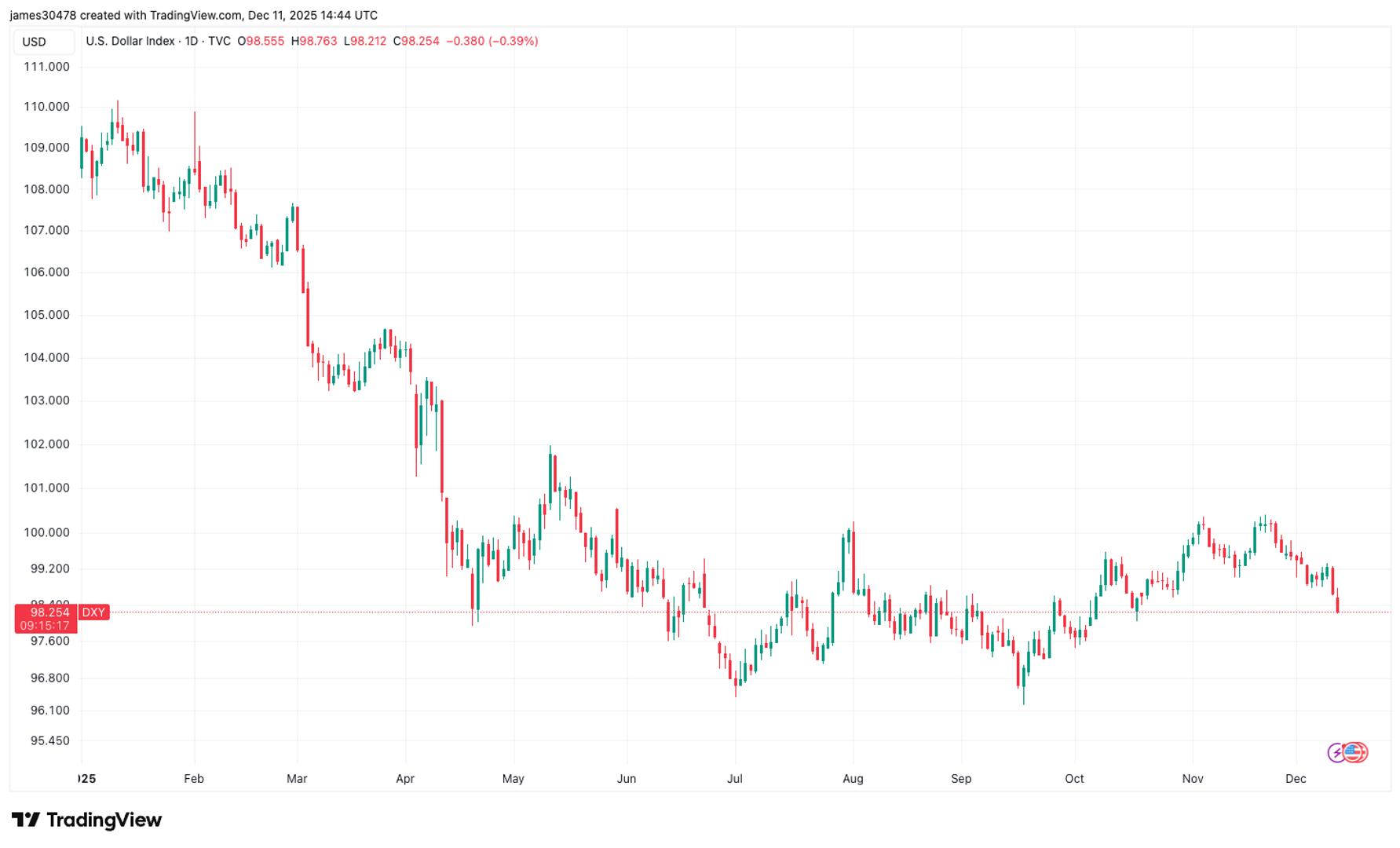
Under normal circumstances, a more accommodative Fed monetary policy generally results in a weaker U.S. dollar, declining bond yields, increasing prices for precious metals, and positive movements in risk assets, including bitcoin and other cryptocurrencies.
In light of the Fed’s recent rate cut, the dollar has indeed weakened — the DXY has dropped to a seven-week low — precious metals prices have surged, with silver reaching a new high of $64 per ounce, and the 10-year Treasury yield has decreased to 4.12% from 4.20%.
However, in a pattern we’ve seen before, the crypto market has not shared in these gains. After a brief spike above $94,000 immediately post-rate cut, bitcoin has dropped to $89,400, reflecting a 3% decline over the last 24 hours. Ether has decreased 5.5%, while XRP and Solana have both fallen nearly 4%.
The sentiment in the crypto market may be dampened by the decline in AI-related stocks, particularly following Oracle’s (ORCL) disappointing quarterly results released last night. Oracle’s stock has plummeted 14% on Thursday, affecting prominent names like Nvidia, AMD, and Broadcom. The Nasdaq has dipped by 1.2%.
Bitcoin mining stocks — many of which have shifted their focus to AI infrastructure — have also seen declines: Hut 8 (HUT), Iren (IREN), Cipher (CIFR), and Riot Platforms (RIOT) have experienced losses ranging from 5% to 6%.
Notably, major bitcoin treasury player MicroStrategy (MSTR) is down 6.4%, while crypto exchange Coinbase (COIN) has fallen by 5%. Robinhood (HOOD) has dropped 8.3% following a November update revealing disappointing trends in crypto trading volumes.
