

Sure! Here’s a rewritten version of your content, with the HTML tags preserved:

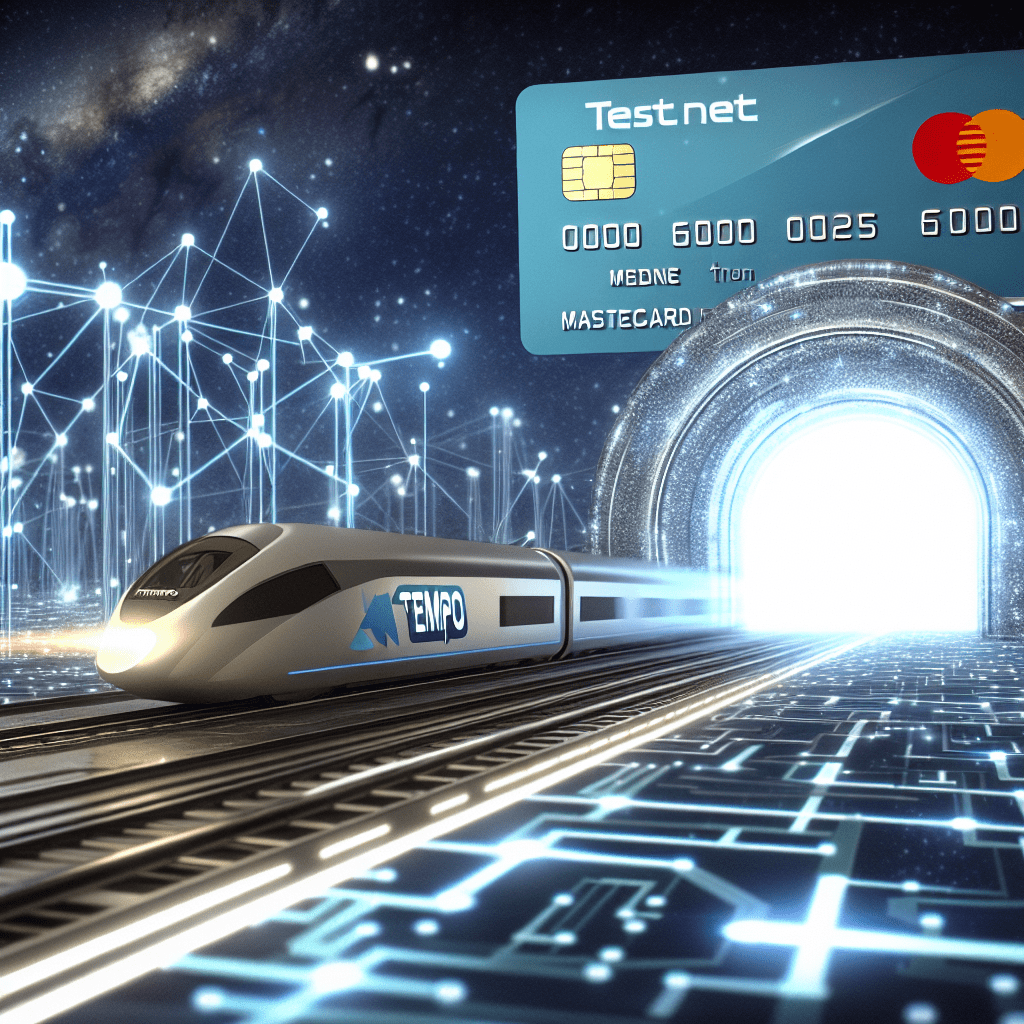
The Tempo blockchain, supported by Stripe, has launched its public testnet in collaboration with Mastercard, Klarna, UBS, and Kalshi, aiming to facilitate sub-cent stablecoin payments for mainstream finance.
Summary
- Tempo, a blockchain focused on payments and backed by Stripe and Paradigm, has launched a public testnet that allows banks, fintechs, and developers to experiment with low-cost stablecoin payment flows on-chain.
- Notable design partners now include Mastercard, Klarna, UBS, and Kalshi, joining Visa, Deutsche Bank, Shopify, OpenAI, and Nubank, covering a diverse array of sectors from banking to AI and e-commerce.
- The network aims to provide sub-cent fees for stablecoin transactions and instant settlement, addressing congestion, variable gas costs, and delays in everyday payment processes.
Tempo, a blockchain dedicated to payment solutions and backed by Stripe along with crypto investments from Paradigm, has officially rolled out its public testnet, a significant move towards enabling stablecoin payments in mainstream finance.
This launch permits developers and business partners to test payment functionalities on-chain, transitioning the project from a conceptual phase to live experimentation on the network.
Tempo and Stripe Partnership
Initially introduced in September, Tempo was engineered for high-volume financial transactions. Its testnet allows fintech companies, banks, and developers to assess the network’s capabilities in anticipation of a future rollout.
The testnet launch was accompanied by an expansion of Tempo’s partnership network, now including buy-now-pay-later provider Klarna, prediction market platform Kalshi, payment giant Mastercard, and Swiss banking institution UBS. They join an existing lineup that includes Deutsche Bank, Visa, Shopify, OpenAI, and Nubank, representing sectors like traditional finance, global card networks, commerce platforms, AI, and digital-finance solutions.
Tempo is designed to tackle barriers that have hindered blockchain integration in daily payments, such as network congestion, fluctuating transaction fees, and reliance on gas tokens with unpredictable valuations. According to the company, transaction fees are set at approximately one-tenth of a cent, payable in U.S. dollar-pegged stablecoins.
By removing exposure to volatile gas tokens, Tempo provides a stable cost structure for enterprise-level payment processes. The network also ensures instant finality, crucial for real-time transactions, remittances, and time-sensitive financial operations. The testnet will function as a platform for testing these technical capabilities, allowing stakeholders to evaluate throughput, reliability, and integration complexities under real-world conditions.
The launch comes amid a shift where stablecoins evolve from mere trading instruments to essential financial infrastructure. Currently, stablecoins account for around $300 billion in assets and are increasingly adopted for cross-border transactions, treasury management, and merchant settlements.
A recent study by Keyrock and Bitso forecasts that business-to-business payments, peer-to-peer transactions, and card-based payments will drive the future growth of stablecoins. Demand for programmable, dollar-pegged settlements is rising as global payments digitalize, according to the analysis. This trend has spurred the development of new blockchains and infrastructure platforms focused on stablecoin transactions, placing Tempo in direct competition with other payment networks.
The launch of the testnet indicates Stripe’s broader involvement in the stablecoin sector. Through its subsidiary Bridge, which concentrates on stablecoin initiatives, Stripe is building infrastructure to support the issuance of digital dollars and facilitate global settlements. Bridge is anticipated to aid Klarna in launching its digital dollar next year, connecting consumer financing to blockchain payment systems. Industry experts view this strategy as positioning stablecoins as a foundational element for internet-native payments.
The journey from testnet to wide-scale deployment for Tempo remains uncertain. The network must prove that its low-fee structure and instantaneous finality can be reliably maintained with high transaction volumes. As banks and international payment processors consider integration, factors such as network stability, security, uptime, and regulatory compliance will be under close scrutiny.
Gaining regulatory clarity will be essential as traditional financial entities transition onto blockchain platforms. With the merging lines between blockchain-based infrastructure and compliant payment systems, ventures like Tempo will be evaluated for performance, governance, and adherence to regulations.
With backing from Stripe and Paradigm, in addition to a global network of partners, Tempo embarks on this stage with institutional confidence. The launch of its public testnet coincides with the growing integration of stablecoins into everyday commerce and the escalating competition to establish the preferred infrastructure for on-chain payments.
Feel free to let me know if you need any further changes!
