

In 2025, cryptocurrency markets transitioned into a data-driven phase. Investors had long depended on halving cycles, on-chain, and TVL charts to gauge sentiment, but the landscape has changed.
This year, CEX spot volumes saw a decrease of 27.7%, while DEX activity rose by 25.3%. Henley reported over 240,000 crypto millionaires globally. With institutions and digital treasuries investing billions, the focus for 2026 shifts from where capital flows to identifying which on-chain metrics reliably indicate the market’s next movements.
To explore these changes, BeInCrypto consulted with the leadership of Dune, whose analytics platform processes billions of blockchain events each day.
Stablecoins: Winners, Structural Adoption, and Velocity as 2026’s Key Metric
Stablecoins grew from around $200 billion to $305 billion in 2025, indicating deeper on-chain utility rather than mere short-term speculation. The leading issuers highlight where institutional liquidity has shifted.
A Dune–Artemis report noted that the total stablecoin supply increased by 63% to $225 billion by February, facilitating $35 trillion in transfers. USDC doubled to $56 billion, while USDT maintained $146 billion, and Ethena’s USDe surged to $6.2 billion—evidence of investor preference for yield-backed tokens over speculative ones.
In an exclusive BeInCrypto discussion, experts dismissed Standard Chartered’s assertion that stablecoins could siphon $1 trillion from banks in emerging markets.
Sponsored
Sponsored
Lisk’s Dominic Schwenter referred to the change as “evolution, not crisis,” while Cork Protocol’s Robert Schmitt characterized it as a “second Bretton Woods,” expanding digital-dollar frameworks instead of threatening local banking systems.
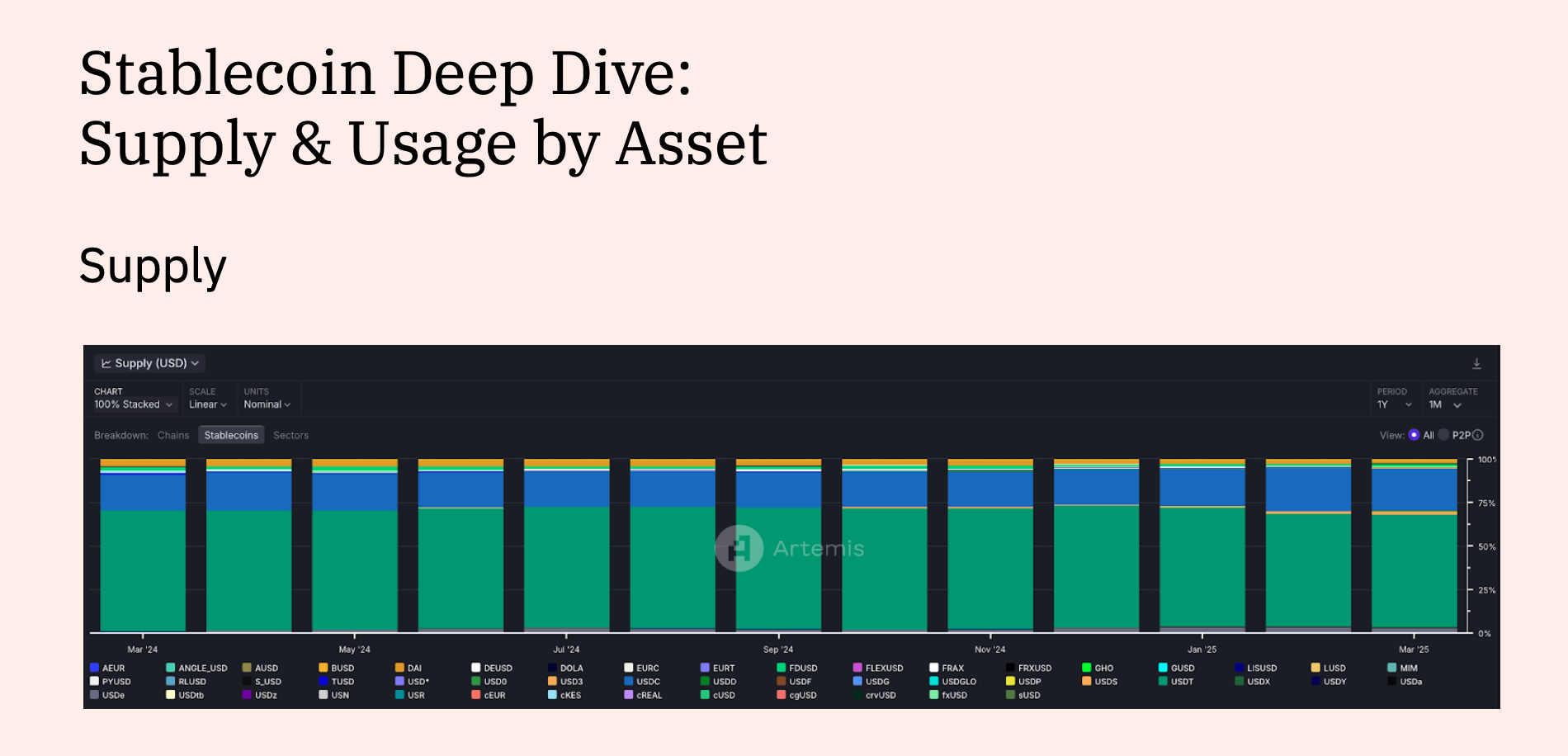
“USDC supply nearly doubled year over year to almost $80 billion. Ethena’s USDe escalated from about $2.4 billion to $14.8 billion, while Plasma—launched less than a month ago—has already garnered $8 billion, placing it fifth in on-chain stablecoin supply. This growth is largely structural, tied to treasuries, DeFi lending, and RWA settlements rather than speculative demand.”
Dune analysts recommend monitoring stablecoin velocity—the transaction volume to market capitalization ratio—as the clearest metric for 2026. It differentiates between active use and hoarding behaviors.
Tokenized RWAs: Treasuries Dominate, Bonds Catch Up
Tokenized real-world assets (RWAs) solidified their role in 2025 as institutions sought higher yields and diversification. Treasury and bond offerings fueled this growth, enhanced by deeper DeFi integration.
A Dune–RWA.xyz report indicated that tokenized assets increased by 224% year to date, driven primarily by US Treasuries and bonds. BlackRock’s BUIDL reached $2.2 billion, and private credit gained 61% to $15.9 billion.
Analysts remarked that RWAs have now become foundational to institutional liquidity and act as a connector between DeFi and traditional markets.
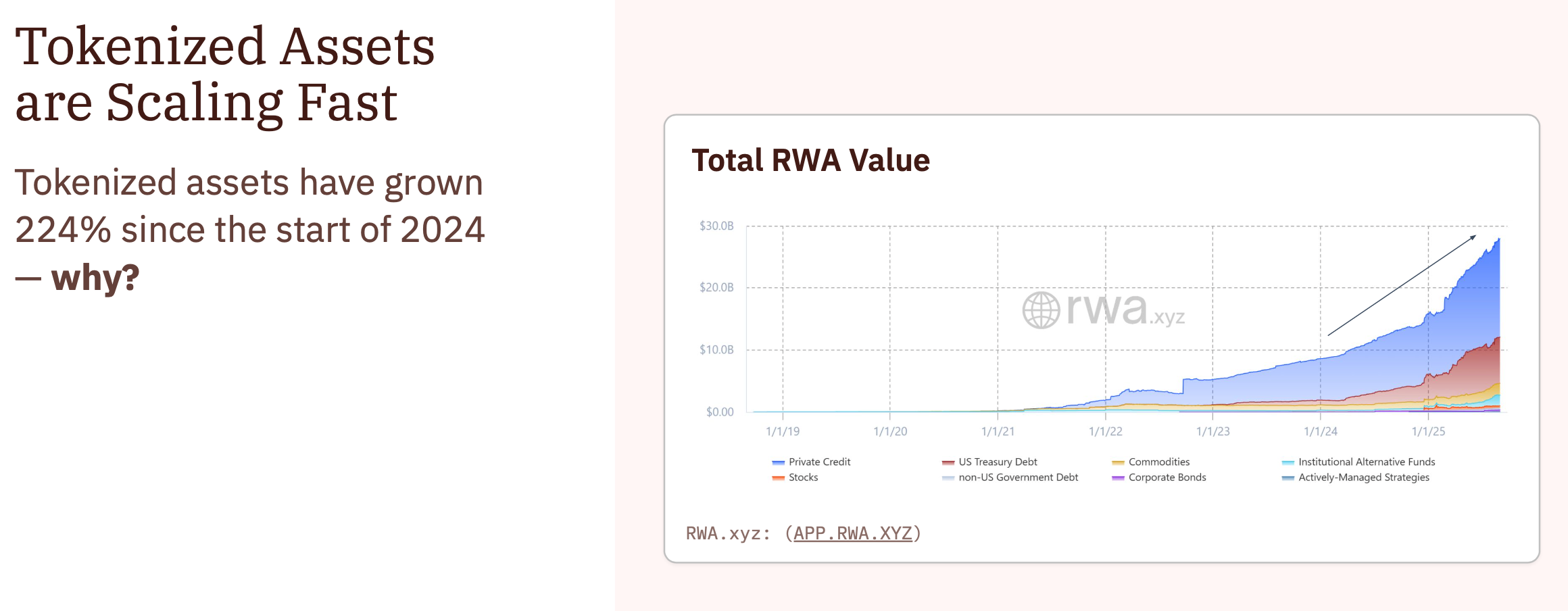
“U.S. Treasuries increased by 224% in TVL year over year, bonds rose by 171%, and private credit expanded by 61% year to date to $15.9 billion. These categories are establishing the cornerstone of capital market restructuring. Interoperability and composable finance are enticing participation.”
Dune’s 2025 RWA report emphasizes that year-over-year TVL growth and the number of unique holders are the most reliable indicators of institutional engagement.
Perpetual DEX Volume and Emerging Risk Thresholds
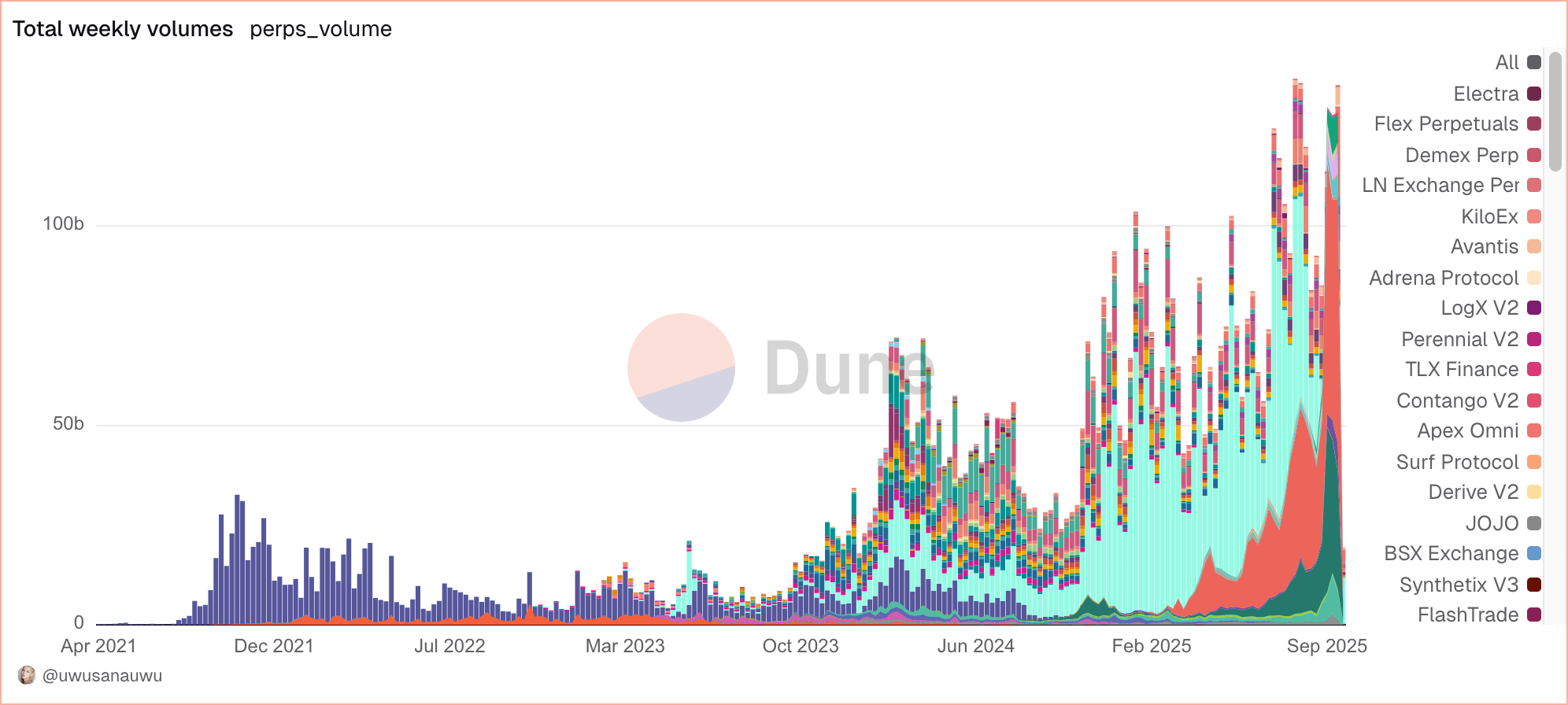
Decentralized perpetuals surpassed $2.6 trillion in annual volume. The concentration of open interest on leading platforms now resembles the leverage clusters previously witnessed on centralized derivative markets.
Bitwise’s Max Shannon stated to BeInCrypto that if DEXs continue to capture market share, volumes could rise to $20–30 trillion in five years. He noted that leverage and trading churn are accelerating growth, with institutional participation and clearer regulations serving as key drivers.
Sponsored
Sponsored
“The perpetual market exceeded $1 trillion in monthly volume. Hyperliquid, with over 70% market share and 90% of open interest, now accounts for 30% of total volume and 50% of open interest. Aster on BNB Chain and Variational on Arbitrum are rising contenders with yield-linked and peer-to-peer derivatives.”
Address concentration spikes have correlated with localized volatility. Observing on-chain open interest in relation to total decentralized volume may provide an early-warning threshold for systemic risk in 2026.
CEX–DEX Liquidity Migration: Structural, Not Temporary
In 2025, centralized and decentralized liquidity began to diverge. CEX deposits averaged $150 billion monthly, while DEX volumes averaged $500 billion, peaking at $857 billion in July. This disparity indicates a structural—not temporary—shift.
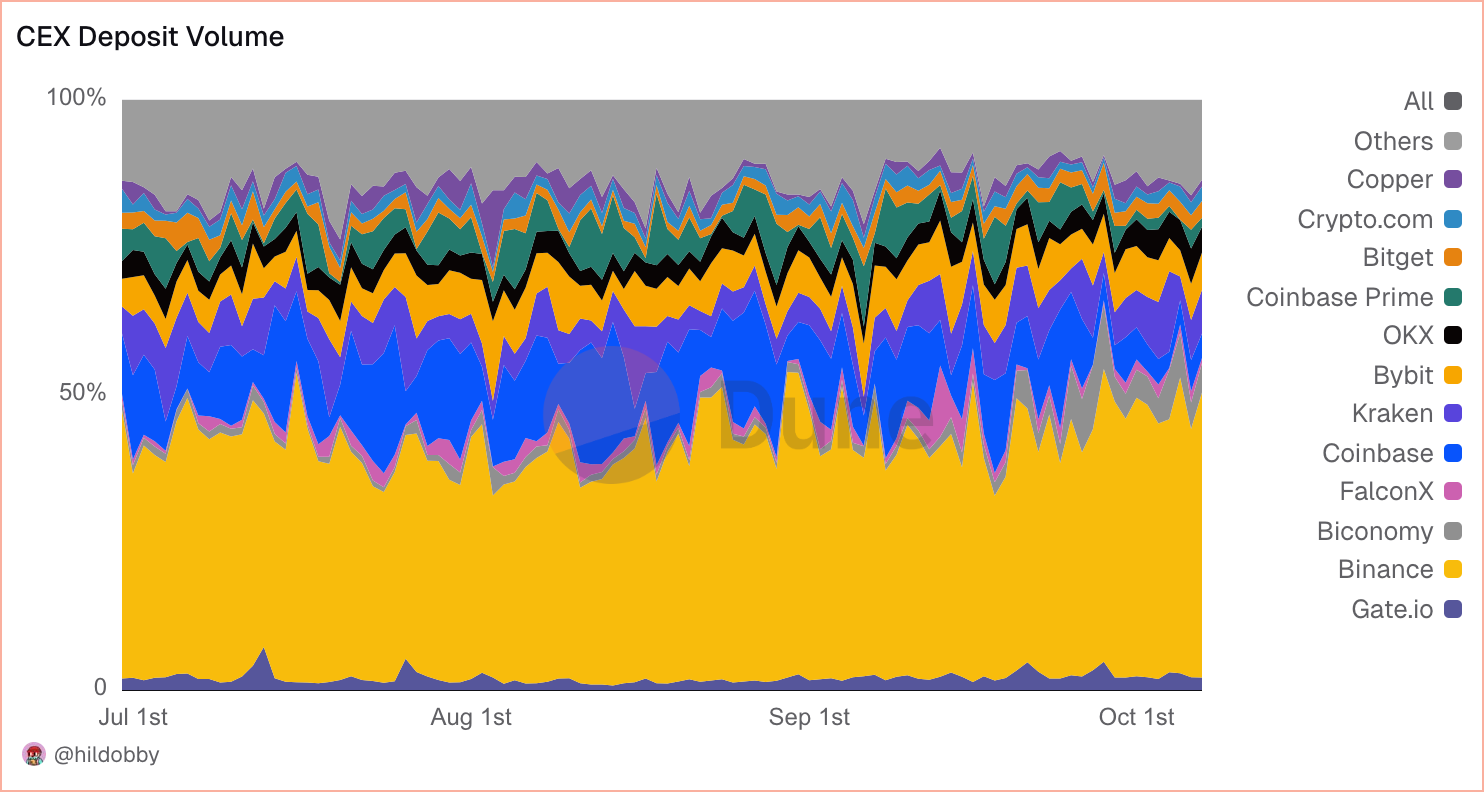
“Data from Hildobby’s dashboards indicate that after November 2023, DEX volumes began to eclipse those of CEXs. In 2025, decentralized spot volume hit $857 billion monthly, while CEX deposits hovered around $250 billion at their peak.”
Analysts interpret this divergence as a long-term rebalancing of liquidity towards permissionless platforms, bolstered by enhanced user interfaces and institutional custody solutions.
ETF Flows and On-Chain Reaction Lag
While ETF inflows do not directly appear on-chain, they leave measurable impacts. Correlations with stablecoin shifts, mempool congestion, and gas-fee surges have strengthened, revealing near real-time liquidity responses.
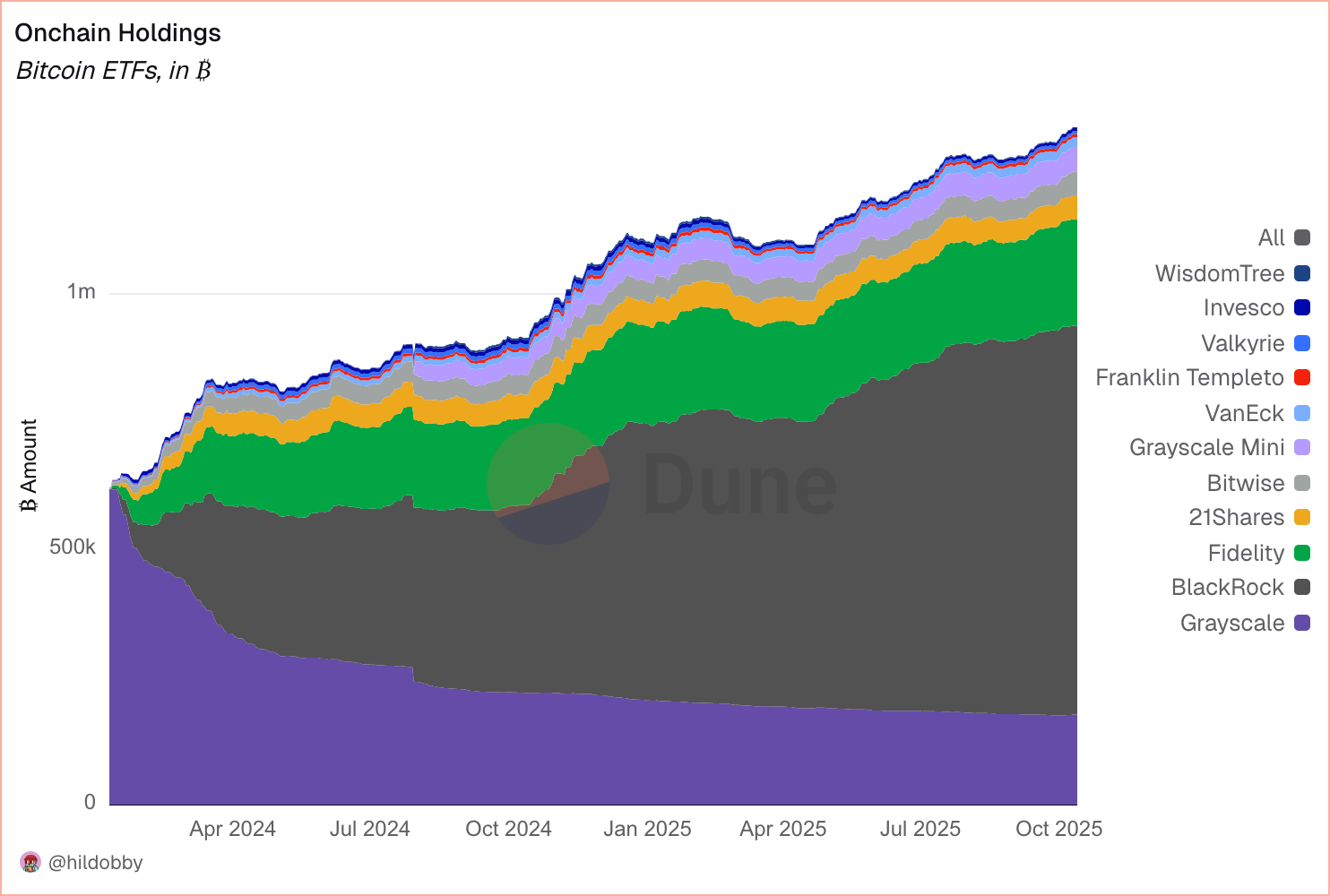
“Bitcoin ETFs currently hold 1.325 million BTC—around 6.65% of supply—valued at $149.8 billion, with a net inflow of 706,000 BTC since inception. IBIT leads with about 28.7% of AUM share. Bitcoin absorption is approximately 3.5% annualized, while Ethereum ETFs hold 6.75 million ETH (~5.44% of supply) valued at $29.2 billion, growing at 4.1% annualized. Stablecoin growth remains the quickest on-chain reaction, typically manifesting within hours of ETF flow changes.”
Checkonchain Analytics co-founder James conveyed to BeInCrypto that long-term investors are realizing $30–100 billion in monthly profits, slowing price increases despite strong demand.
Sponsored
Sponsored
“Some holders are shifting from on-chain assets to ETFs, but they do not constitute the majority,” he stated. “Institutional inflows remain substantial—amounting to tens of billions of dollars. Since October 2024, IBIT has been at the forefront and is still the only fund receiving consistent inflows. The US now retains about 90% of global ETF assets.”
Dune’s ETF dashboards confirm that on-chain liquidity typically reacts within hours to significant ETF distributions, positioning stablecoin supply as the most reliable indicator of new inflows.
The Meme Coin Dilemma
Meme coins continued to dominate user engagement in 2025, especially on Solana-based launchpads. However, while the activity was high, survival rates remained low.
a16z CTO Eddy Lazzarin noted that the “casino-like” trend undermines crypto’s credibility and diverts talent from genuine innovation.
Conversely, other VCs argue that meme trading keeps users active and engaged on-chain, illustrating a divide between speculation and utility that characterizes the current cycle.
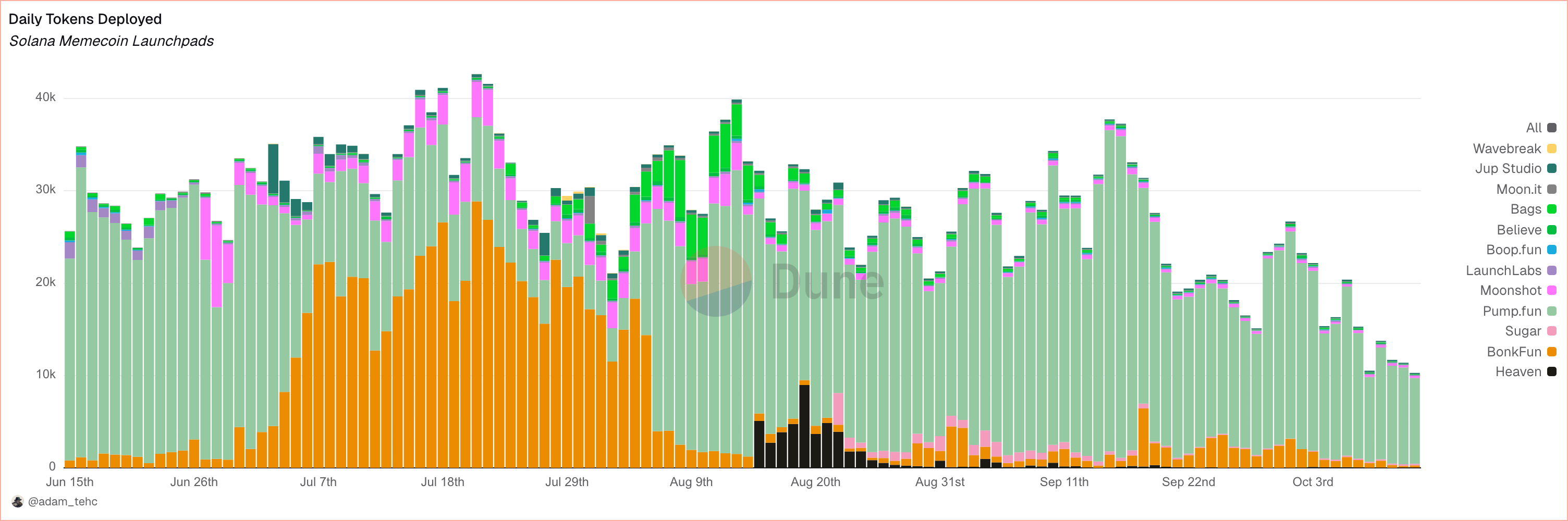
“Within 24 hours, about 11,600 tokens debuted across Solana platforms. Pump.fun alone featured 10,704, but only 0.7–0.8% ‘graduated’ to liquidity. Pump.fun maintains approximately 79,600 daily active users and $63 million in daily trading volume, generating $602,000 in fees. Token-level retention is limited, but platform-level engagement is robust.”
The data indicates that meme coins serve as effective entry points but seldom develop into sustainable ecosystems. Monitoring platform-level DAUs and fee metrics will be key.
New NFT Entrants Still Rising
Despite subdued trading volumes, NFTs continue to function as onboarding methods. Minting statistics reflect new user influxes rather than contraction.
“Unique NFT purchasers surged from approximately 49 million in 2024 to over 173 million during the initial ten months of 2025. Mint volumes peaked at $78 billion in November 2024 and stabilized around $30 billion monthly. Secondary trades may be smaller but are consistent, returning to levels seen in 2021.”
Sponsored
Sponsored
This trend reinforces NFTs’ role as gateways into crypto, though depth in the secondary market remains limited compared to earlier cycle peaks.
DePIN and DeSci: Utility Outpaces Hype
Outside of tokenization and ETFs, the DePIN and DeSci sectors have quietly expanded in 2025. On-chain data indicates that fundamentals, not speculation, are driving growth.
NodeOps co-founder Naman Kabra remarked that the sector “isn’t defunct—it’s evolving.” He framed DePIN’s transition from hype to infrastructure as akin to Bitcoin’s early growth, filtering out projects unable to provide real utility.
The Dune “Onchain Layer of Solana DePIN” report identified 238,000 active nodes across Helium, Hivemapper, and Render, generating nearly $6 million in on-chain revenue. Kabra noted that the sector’s “boring path” demonstrates lasting value as decentralized infrastructure integrates into everyday life.
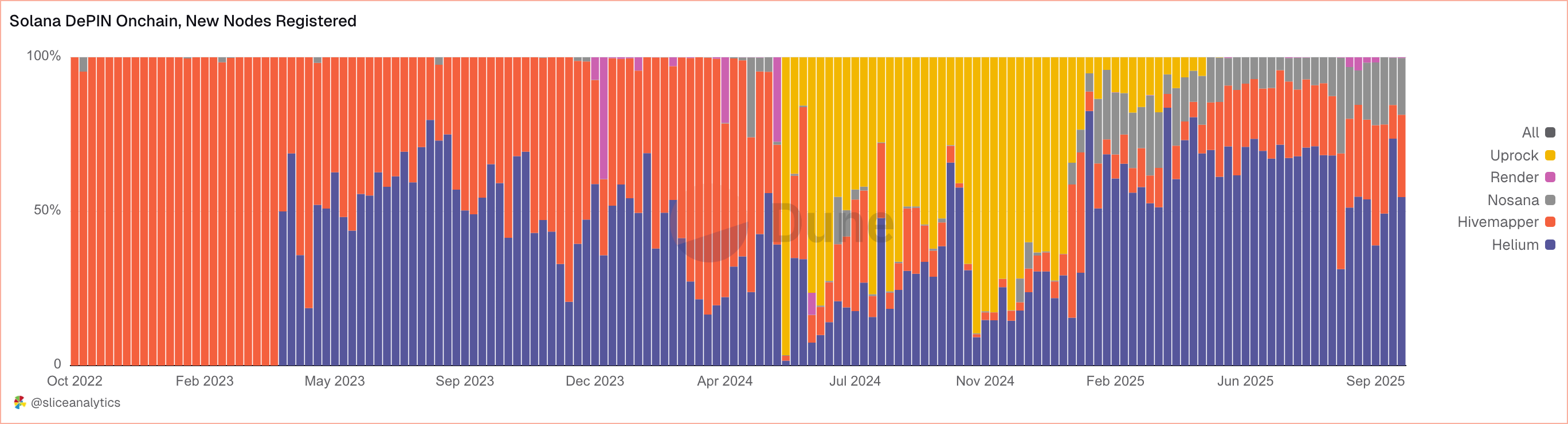
“Helium Mobile attracted 462,064 subscribers and 84,343 nodes, adding over 10,000 new users weekly. XNET contributors increased by 8% to 827, and Nosana executed 2.4 million compute tasks. Hivemapper and Render exhibited steady growth. Track node counts, contributors, and completed jobs—they’re the most reliable demand indicators.”
The growth in DePIN’s tangible infrastructure and DeSci’s research funding models illustrate crypto’s gradual assimilation into real-world productivity.
2026’s Most Predictive Indicator: Stablecoin Supply
As market capitalization rose above $3.5 trillion and Bitcoin dominance surpassed 62%, one metric consistently predicted price movements.
“If you were to focus on one on-chain metric in 2026, make it stablecoin supply. It’s the clearest indicator for new capital inflow. Stablecoin growth shows about 0.87 correlation with BTC and often precedes rallies. Exchange reserves represent potential for the next move.”
Stablecoin growth continues to outstrip ETF inflows and funding rates as a predictive tool, shaping the liquidity landscape leading into 2026.
Conclusion: On-chain Data is Shaping Crypto’s Next Wave
Dune’s 2025 analytics depict a maturing market built on data accuracy. Stablecoins continue to be the core of liquidity, RWAs institutionalize returns, and DePIN points to functional growth.
As 2026 nears, on-chain insights are no longer supplementary—they are essential. For investors, the advantage lies in interpreting signals more swiftly and effectively than the competition.
