

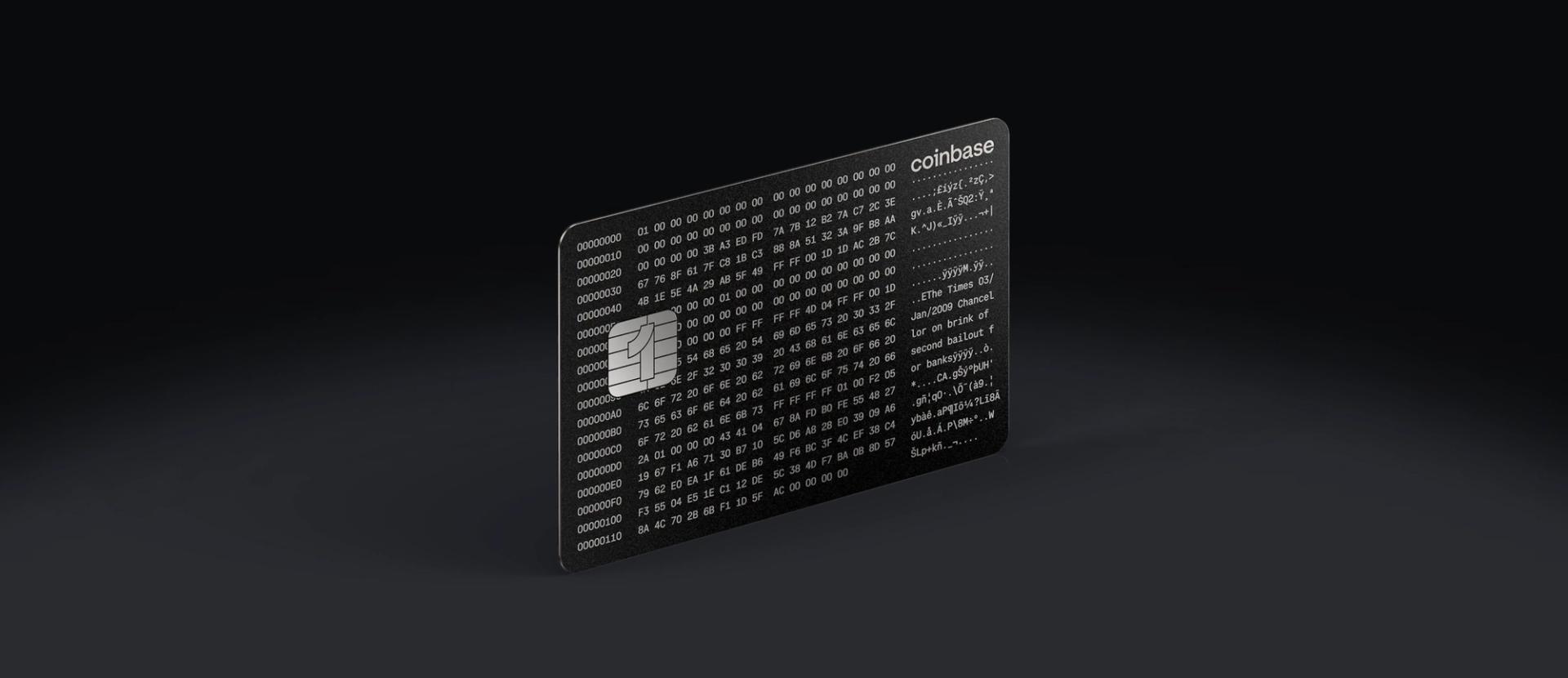
Coinbase is gearing up to unveil a new American Express credit card in the U.S. this autumn, crafted specifically for bitcoin aficionados, with special attention to its design and rewards.
A card inspired by bitcoin’s origin
Distinct from most crypto-affiliated cards, Coinbase’s forthcoming offering transcends mere incentives — it embodies symbolism.
The card features engravings from the Genesis Block, the inaugural block ever mined on the Bitcoin chain by the enigmatic Satoshi Nakamoto on January 3, 2009. This singular block kickstarted the Bitcoin blockchain and heralded a novel financial paradigm.
This choice of engravings is not just aesthetic — it serves as an homage to Bitcoin’s seminal moment. The hexadecimal code stamped on the card is part of the raw data from that initial block.
For those unfamiliar, hexadecimal (or “hex”) is a base-16 numbering scheme utilized in computing. It forms the digital vernacular in which Bitcoin’s early narrative was articulated — and now, it is literally inscribed into a tangible financial instrument.
Within that block lies a notable message extracted from a Times newspaper headline coinciding with its release: “Chancellor on brink of second bailout for banks.”
Satoshi included it as a timestamp and a reflection of intent — a critique of central bank monetary expansion and the shortcomings of mainstream financial systems during the 2008 crisis. It has evolved into a rallying point for Bitcoin advocates who regard the cryptocurrency as a countermeasure to centralized monetary dominion.
The card’s very name — Coinbase — is embedded in Bitcoin’s genealogy. In blockchain lexicon, a “coinbase transaction” denotes the first transaction in each new block, which generates and allocates new bitcoin to miners.
This is a foundational aspect of the network’s functionality, and by embracing the term, Coinbase is directly linking its identity to Bitcoin’s core purpose: the generation of new currency devoid of centralized control.
Collectively, these design elements aim to resonate with a distinct demographic: those who value Bitcoin as not merely an asset, but as an ideology — anchored in financial autonomy, resistance to censorship, and a skepticism of traditional banking frameworks.
Product features, launch strategy, and market landscape
The Coinbase One Amex card will be exclusively available to members of Coinbase One, the company’s subscription service. Qualified cardholders can earn up to 4% cashback in bitcoin on purchases, with rewards scaling based on their Coinbase asset holdings.
The card will incur no foreign transaction fees and can be settled using either a linked bank account or cryptocurrency held on the platform. Cardholders will also enjoy standard American Express benefits, including special offers and events.
Coinbase asserts that bitcoin rewards accrued through spending won’t be reported on 1099 forms, although tax implications may arise if those rewards are subsequently sold.
While Coinbase is prominently showcasing bitcoin’s heritage in its advertising, cryptocurrency reward cards are not a recent innovation.
For instance, Gemini rolled out a credit card in 2023 that provides up to 3% crypto cashback on spending and accommodates a range of digital assets, including bitcoin and ether as well as stablecoins.
The distinction lies in the positioning: Gemini promotes its offering as a practical instrument for earning crypto rewards, whereas Coinbase presents its Amex card as more symbolic — a method to synchronize daily financial transactions with the foundational principles of Bitcoin.
This differentiation could be significant. For users merely seeking exposure to various cryptocurrencies, existing cards might prove more enticing. However, for individuals who identify as part of the Bitcoin narrative — or aspire to — Coinbase is wagering that belief and identity will appeal as strongly as cashback incentives.
