

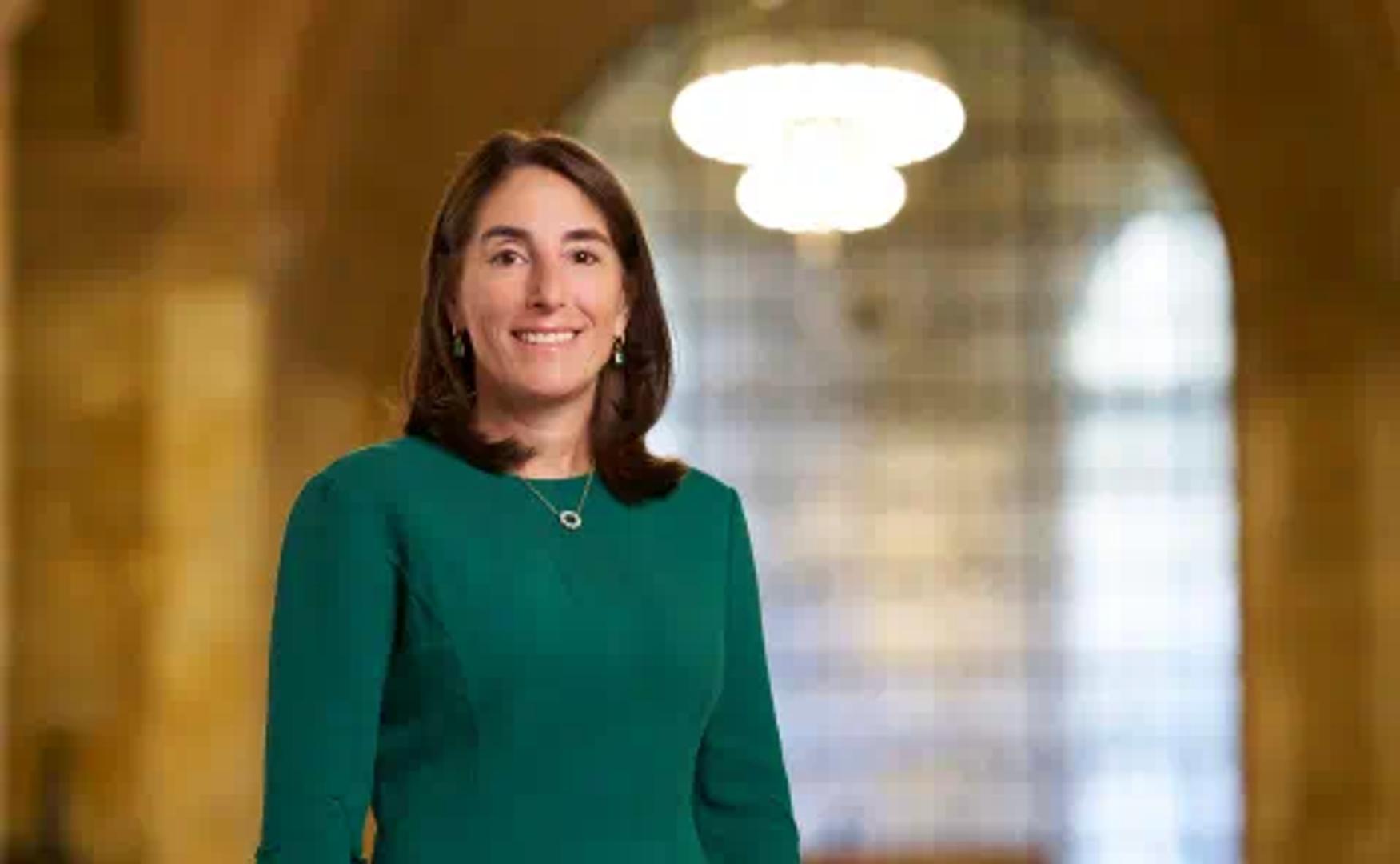
It’s well-known that Cleveland Fed President Beth Hammack has established herself as perhaps the most hawkish figure within the U.S. Federal Reserve since her appointment in 2024 after a tenure at Goldman Sachs.
However, next year, she will have a more significant opportunity to promote her views. The Fed’s Federal Open Market Committee (FOMC) determines interest rate policy. Among its twelve voting members are four of the Fed’s eleven district presidents, who serve one-year terms on a rotating basis. In 2026, Hammack, as the head of the Cleveland Fed, will join that voting body.
“My base case is that we can maintain our current stance [on rates] for a time, until we gather clearer evidence that inflation is either returning to target or the employment situation is significantly weakening,” Hammack stated to the WSJ this past weekend.
“I approach it with caution,” said Hammack regarding last week’s November Consumer Price report, which revealed an unexpected drop in the headline inflation rate to 2.7% from 3.1%, with a similar decrease for the core rate.
Hammack attributed the data distortions to the previous fall’s government shutdown, and she estimates the rate closer to the 2.9% or 3.0% that economists had anticipated.
In general, easier monetary policy from central banks is expected to be beneficial for risk assets like stocks, commodities, and bitcoin . While this held true this year for stocks and commodities like gold and silver — all of which are at or near record highs — bitcoin has faced challenges, experiencing a decline from its own all-time high shortly after the Fed’s initial rate cut in September.
A significant divergence with Waller
Among the potential candidates for President Trump’s next Fed chair is current Fed Governor Chris Waller.
Waller recently noted that he assesses the existing 3.5%-3.75% range of the fed funds rate as 50 to 100 basis points above the neutral level — suggesting that Fed policy remains fairly tight.
Conversely, Hammack expressed to the WSJ that the fed funds range is currently “a bit below” the neutral rate, implying that she believes current policy is somewhat stimulative.
This creates a substantial gap between two pivotal policy influencers for 2026. Regardless of where rates move in 2026, expect differing opinions on what is typically a unanimous or near-unanimous vote. The eventual Fed chair may find it challenging to secure the seven votes needed at each meeting to establish policy.
