

The U.S. Federal Reserve has made a significant move in redefining how banks under its oversight can interact with cryptocurrencies, overturning regulations introduced in 2023 that severely restricted such engagements.
Related Reading
This decision reflects a broader reconsideration within the central bank regarding how regulations should evolve in response to financial innovations, especially as digital assets increasingly merge with traditional banking systems.
Previously, uninsured state-chartered banks had to adhere to the same limitations as federally insured banks to maintain Federal Reserve oversight. This framework effectively prevented some crypto banks from accessing essential payment systems or becoming Federal Reserve members.
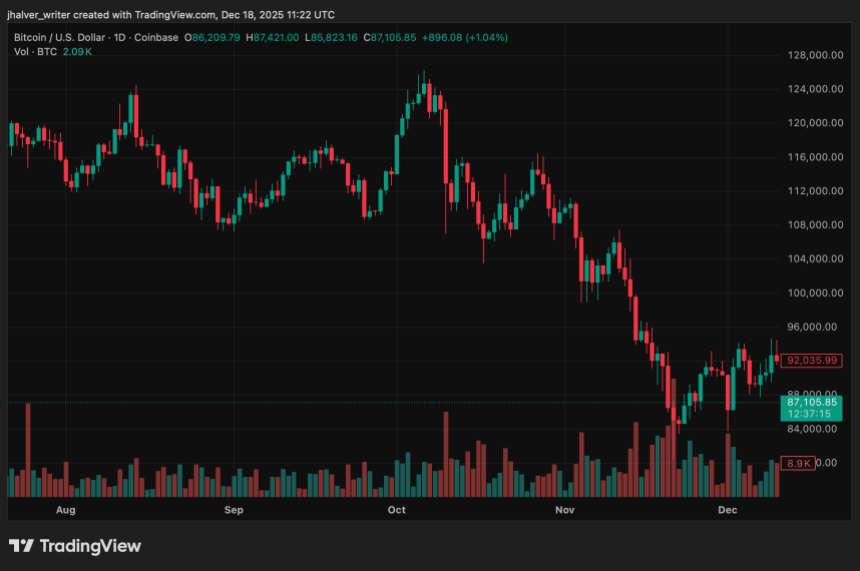
BTC's price trends to the downside on the daily chart. Source: BTCUSD on Tradingview
Impact of the Policy Change on Banks
The new guidelines create a formal route for both insured and uninsured banks under the Federal Reserve to engage in certain innovative activities, including those associated with cryptocurrencies.
While institutions must still meet supervisory and risk-management requirements, they are no longer automatically disqualified based on their business models.
For uninsured banks, the ramifications are substantial. Gaining access to Federal Reserve membership would enable direct settlement through central bank payment systems, reducing reliance on intermediary banks.
This shift could decrease operational frictions related to crypto custody, settlement, and similar services, potentially enhancing the role of banks in the digital asset markets while maintaining current safety and soundness standards.
Custodia Case Illustrates Regulatory Strains
The reversal of policy has drawn renewed focus on Custodia Bank, a cryptocurrency-centric institution that was denied a Federal Reserve master account partly due to the now-voided guidance.
Custodia CEO Caitlin Long contends that the 2023 policy essentially obstructed lawful access to the Fed’s infrastructure and welcomed its repeal as a correction to prior regulatory overreach.
Not all lawmakers concur. Federal Reserve Governor Michael Barr opposed the decision, cautioning that relaxing the framework might jeopardize a fair competitive landscape and prompt regulatory arbitrage.
Barr’s stance underscores the ongoing discussion within regulatory frameworks about balancing innovation with financial stability.
Wider Effects on Cryptocurrency Markets
While the Fed’s action does not immediately alter how cryptocurrencies such as Bitcoin or Ethereum are traded, it may gradually shift market structures. Improved access for banks could encourage deeper institutional involvement, enhance liquidity, and broaden custody and settlement alternatives.
Related Reading
Currently, this shift indicates a more adaptable regulatory approach, one that recognizes the swift advancements in digital asset markets and the banks aiming to engage with them.
Cover image from ChatGPT, BTCUSD chart from Tradingview
