

Ethereum co-founder Vitalik Buterin asserts that Ethereum has “resolved” one of crypto’s biggest obstacles: the blockchain trilemma.
In a post on X this past Saturday, Buterin highlighted the significance of peer data availability sampling (PeerDAS) and Zero-Knowledge Ethereum Virtual Machines (ZK-EVMs), stating that these advancements are transforming Ethereum into “a fundamentally new and more powerful type of decentralized network.”
“With PeerDAS (2025) and ZK-EVMs (expect initial portions of the network to adopt it in 2026), we achieve: decentralized consensus and high bandwidth,” he remarked, adding:
“The trilemma has been resolved — not just theoretically, but with live running code, of which one half (data availability sampling) is *on mainnet today*, and the other half (ZK-EVMs) is *production-quality on performance today* — safety is the remaining aspect.”

PeerDAS is a scalability enhancement introduced in the Fusaka upgrade in December, allowing Ethereum to manage significantly more data.
On the other hand, ZK-EVMs, which have been available for some time, are virtual machines that work with both ZK proofs and the existing Ethereum virtual machine.
Buterin noted that ZK-EVMs are still in their “alpha stage,” as they are ready for performance but need additional security upgrades. He provided a four-year timeline for ZK-EVMs to be fully implemented within Ethereum.
Once this occurs, Buterin believes the vision of resolving the trilemma will be fully achieved.
“Over the next ~4 years, anticipate the complete rollout of this vision: * In 2026, significant non-ZK-EVM gas limit increases will occur due to BALs and ePBS, along with the first opportunities to operate a ZK-EVM node*,” he elaborated.
“Between 2026-28, adjustments for gas repricings, changes to state structure, execution payload moving to blobs, and additional modifications to ensure safe higher gas limits will take place * In 2027-30, expecting substantial further gas limit increases as ZK-EVM becomes the primary method for block validation on the network,” he continued.
Related: BitMine stakes $259M more ETH, creating a validator entry queue nearing 1M Ether
Ethereum’s 10-Year Journey to Solve the Trilemma
Buterin remarked that achieving a solution to the trilemma has required a decade of dedicated work, referencing his initial post about solving data-availability challenges back in April 2017.
“This has been a 10-year journey […] but it has finally manifested,” he stated.
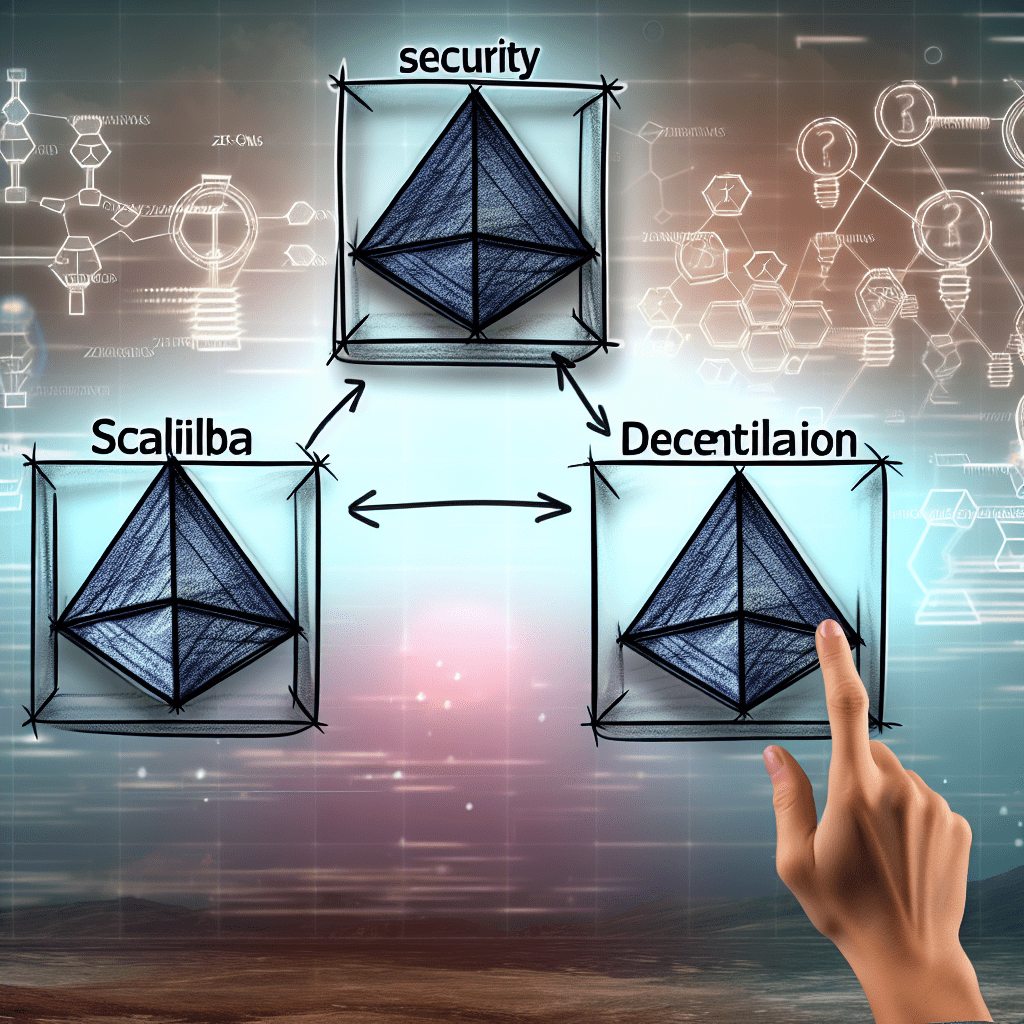
The blockchain trilemma refers to the challenge of constructing a blockchain network that adequately balances decentralization, security, and scalability simultaneously, without one aspect compromising the others.
Typically, most blockchains are forced to prioritize one or two of these aspects, such as speed and security, during their early development stages while gradually striving to achieve a balance of all three.
In his post, Buterin used Bitcoin as an example, indicating that the network was designed for “high decentralization” and security, yet it faces scalability issues.
Magazine: Ethereum’s Fusaka fork explained for dummies: What the hell is PeerDAS?
