

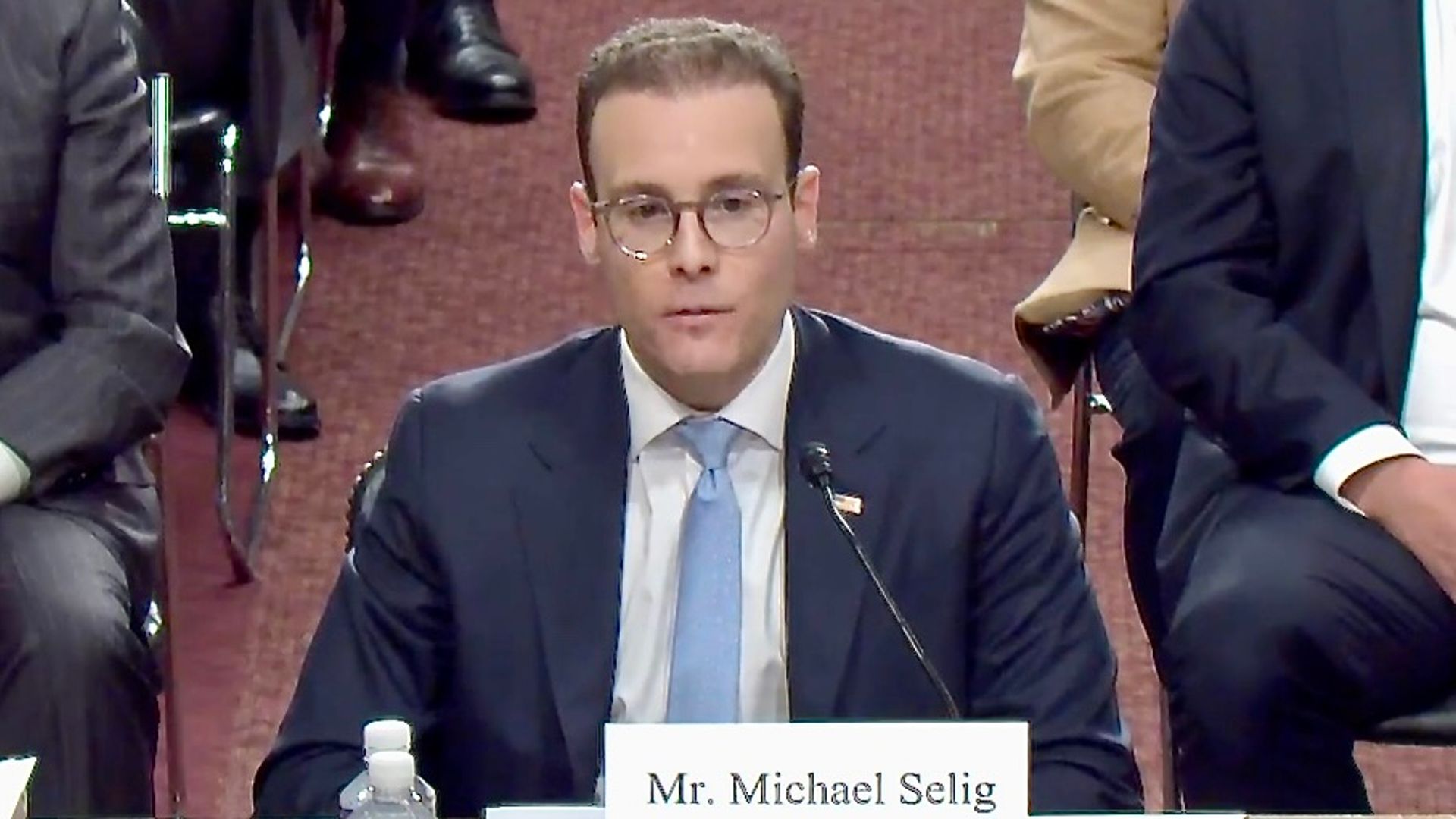
As President Donald Trump’s second administration progresses, he has appointed Mike Selig as chairman of the Commodity Futures Trading Commission and Travis Hill as chairman of the Federal Deposit Insurance Corp., filling key roles in U.S. crypto regulation.
The CFTC is set to become a pivotal regulator of U.S. crypto activities, particularly if Congress finalizes legislation granting it explicit authority over crypto derivatives. Selig and Hill were approved by the Senate in a vote of 53-43, alongside several other nominees. Upon his confirmation, Selig will succeed Acting Chairman Caroline Pham, who has implemented various pro-crypto policies while awaiting a permanent leader.
Pham has plans to join MoonPay, a U.S.-based crypto infrastructure firm, as chief legal officer and chief administrative officer after her departure, as CoinDesk noted last month.
Once Selig, who has been involved in drafting crypto policies at the Securities and Exchange Commission, takes charge, ongoing initiatives from the CFTC’s “crypto sprint” include efforts to encompass stablecoins within tokenized collateral and a rulemaking initiative to integrate blockchain technology into the agency’s regulatory framework. The agency has also urged regulated platforms to offer spot leveraged crypto products, with Bitnomial being the first to pursue such an introduction.
A notable challenge for Selig is that the CFTC’s commission, originally composed of five members, has dwindled to just one. Pham plans to leave as soon as Selig steps in, which will make him the sole commission member. This situation may ease his policy implementation, but could introduce uncertainty regarding the legal robustness of the commission’s actions.
Selig will also begin his tenure as Congress is working on significant legislation to expand the agency’s powers, particularly regarding crypto spot trading. This bill has already passed in the House of Representatives and is under deliberation in the Senate, where the Senate Banking Committee may still schedule a markup hearing before month-end, according to close observers.
At the FDIC, which regulates stablecoin issuers and substantially influences crypto banking, Hill has been operating as the acting chairman. He has adopted a pro-crypto stance in this capacity.
“We reversed the previous administration’s policies,” he stated during a Dec. 2 hearing at the House Financial Services Committee, addressing the former Biden administration’s directive that banking regulators required approval before engaging in new crypto activities. “While banks must manage safety and risk, they lack prohibitions on serving these industries.”
Hill has also played a significant role in responding to crypto industry grievances regarding “debanking,” a situation where banks cut ties with crypto businesses and their executives, an issue many in the industry and their Republican legislative allies contend was exacerbated by existing regulatory policies.
There have been notable gaps in crypto oversight under Trump’s administration due to the absence of permanent leaders at the CFTC and FDIC. Leaders have already been appointed at the Securities and Exchange Commission and the Office of the Comptroller of the Currency, along with actions taken at the Department of the Treasury. Trump has also been making headway at the Federal Reserve Board, where his vice chair for supervision nominee, Michelle Bowman, assumed her role in June. However, Trump is still awaiting a replacement for Chairman Jerome Powell, whose term concludes next year.
In an unusual move, Senate Republicans employed a mass-confirmation strategy for Trump’s federal nominees. The resolution that confirmed these two officials included 97 questions bundled in a single document, bypassing the traditional process where each nominee is evaluated individually.
Read More: Trump’s CFTC Pick, Mike Selig, Clears Hurdle on Way Toward Confirmation Vote
