

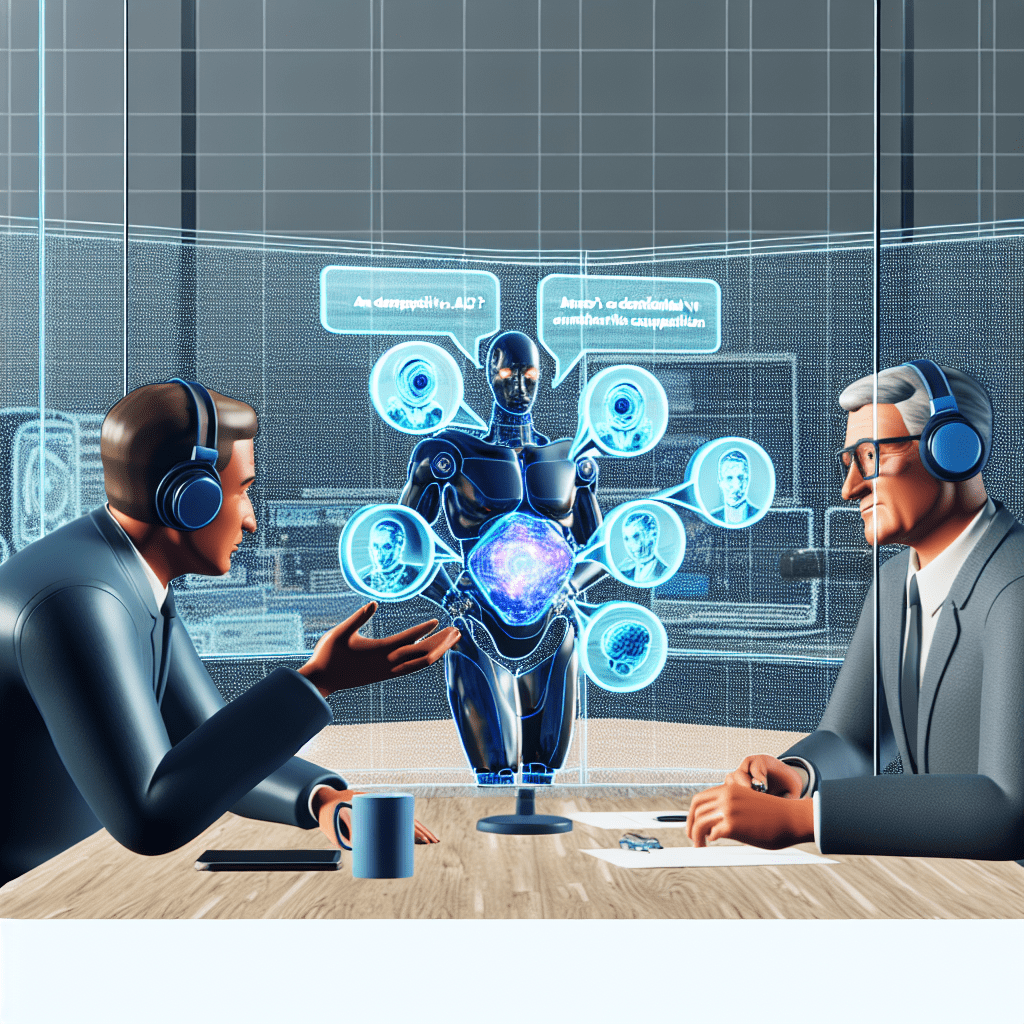
Nvidia (NVDA) CEO Jensen Huang believes that the race for artificial intelligence will not be won by a single breakthrough.
During his appearance on The Joe Rogan Experience, Huang characterized the rapid advancement of AI as a continuation of a longstanding global competition for technological superiority, altering geopolitical dynamics from World War II through the Cold War.
“We’ve always found ourselves in a tech race,” Huang remarked, drawing parallels between today’s quest for AI leadership and the Manhattan Project. The distinction, he suggested, lies in the pace: rather than a sudden conclusive victory, AI will progress in waves—incremental improvements that may seem negligible at the time but are significant in retrospect.
However, this does not imply that the stakes are low, especially from the perspective of the CEO of a leading chip manufacturer for AI technologies. Huang pointed out that AI systems have become approximately 100 times more capable in the past two years, a rapid evolution that has sparked public concerns regarding autonomous weapons and machines acting beyond human ethical boundaries.
Huang countered these fears by stating that many advancements are focused on enhancing functionality and safety, making AI systems more reliable, useful, and less prone to errors.
He also advocated for the U.S. military’s involvement in AI development, positing that their engagement can help legitimize the technology’s role in national security, rather than leaving it to obscure, unregulated players.
Rogan brought up common apprehensions: the potential for AI to surpass human judgment and the long-term risk that quantum computing might dismantle current encryption methods. Huang responded by asserting that AI will remain “a click ahead,” noting that history is rife with instances where society has panicked over new technologies, only to adapt once those innovations became understandable and regulated.
If Huang has a vision for the future, it is not of a solitary victor celebrating triumph. Instead, he envisions AI as an integral infrastructure, seamlessly integrated into everyday operations, from healthcare to transportation—an unobtrusive intelligence that becomes a background layer of computing, functioning so well that it goes unnoticed.
Read more: Amazon Enters AI Arms Race as Crypto and Risk Asset Fears Mount
