


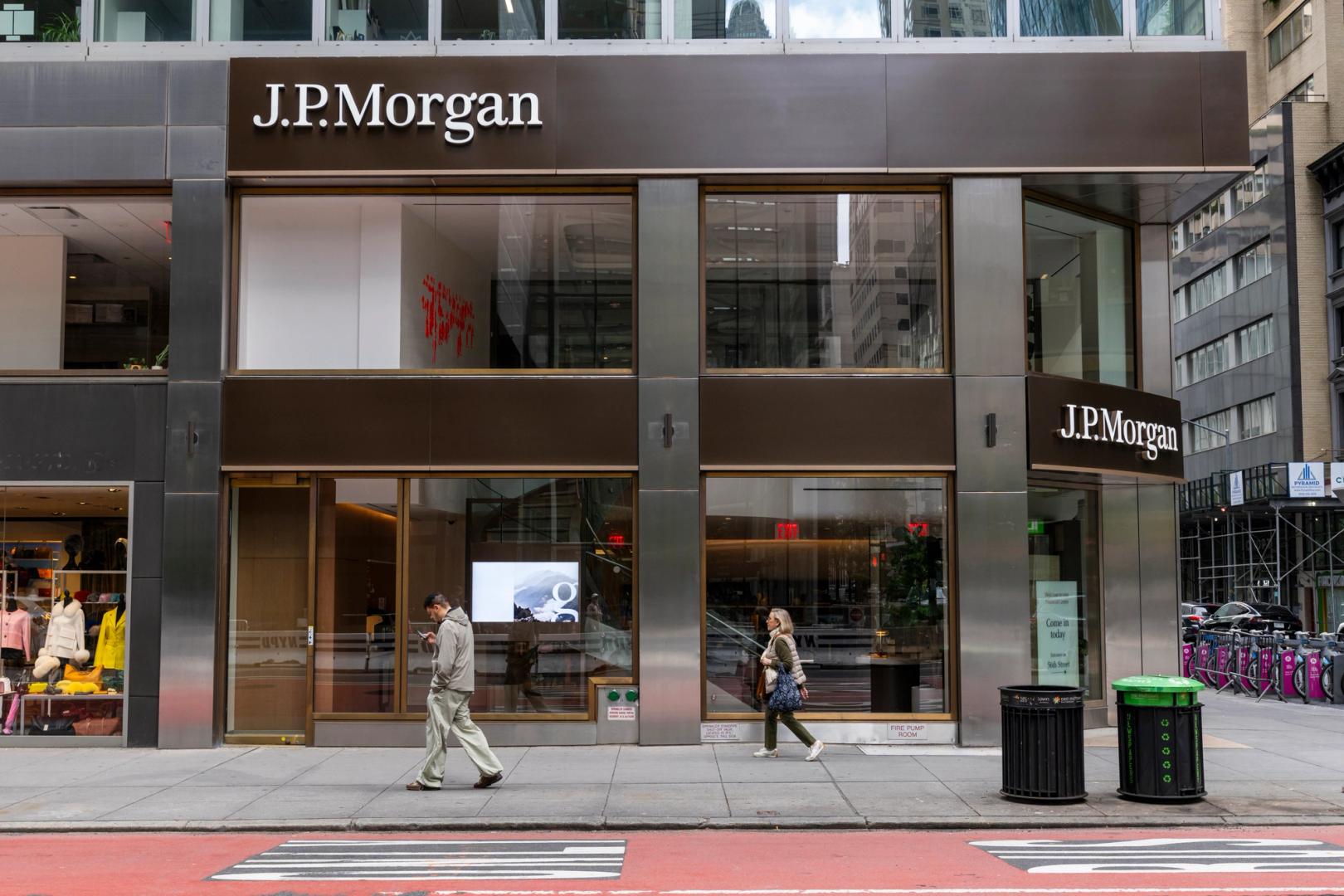
JPMorgan’s (JPM) announced plans to introduce crypto trading for institutional clients could transform the competitive landscape, though it might not adversely affect its competitors.
As per analysts, the entry of the Wall Street powerhouse may actually benefit current players like Coinbase (COIN), Bullish (BLSH), and Galaxy Digital (GLXY), even as it indicates tougher competition ahead.
“Should JPMorgan provide crypto trading for institutional clients, it will significantly bolster the space,” stated Owen Lau, an analyst at ClearStreet. “It will further legitimize cryptocurrency and expand distribution avenues,” he added. “The ripple effect will likely extend to other banks. Coinbase and Bullish are well-positioned to take advantage of aggregating and matching institutional orders from this broad distribution network.”
“As JPMorgan operates as a broker, they likely utilize exchanges for order matching,” Lau continued. This creates opportunities for platforms such as Coinbase Prime and Bullish — which already provide institutional-grade crypto execution — to play crucial roles in settling those trades.
Read more: JPMorgan considers crypto trading for institutions amidst growing demand
Nevertheless, this move introduces new challenges for established players. In a report last week, Compass Point’s Ed Engel mentioned that while Wall Street’s increasing involvement in crypto “expands the reachable market for digital assets,” it simultaneously heightens competition.
“Firms like GLXY and BLSH stand to gain from higher institutional engagement, whereas COIN and Circle Financial (CRCL) may encounter risks related to margin pressures,” Engel remarked.
As institutional crypto activities surge, Engel indicated that trading volumes in both spot and derivatives markets are expected to climb, along with the demand for lending and custody services — areas where crypto-native companies have already developed infrastructure. However, lower-touch services like basic spot trading might experience decreased fee rates.
“We view GLXY as a primary beneficiary of Wall Street’s crypto adoption due to its focus on principal trading, derivatives, and high-touch prime brokerage services,” Engel noted. “BLSH can also take advantage of Wall Street’s endorsement, given its competitive spot fee rates globally.”
In summary, analysts believe that JPMorgan’s potential entry could attract more traditional institutions into the crypto realm. However, rather than replacing existing platforms, it might push them further into the core of institutional finance — matching trades, providing custody, and offering risk management solutions.
In practice, this could involve a pension fund executing a crypto trade through a traditional Wall Street bank, only for it to be finalized on Coinbase Prime or Bullish. The increased demand from JPMorgan and any subsequent major lenders would likely enhance the liquidity that these platforms could capture.
To date, JPMorgan has yet to confirm the initiation of crypto trading for institutional clients, but the prospect seems increasingly plausible as the bank has gradually embraced the sector, including launching its own stablecoin and exploring blockchain settlement solutions.
