


Crypto assets are sending mixed signals leading up to the Federal Reserve’s September rate decision. On-chain data indicates a notable decline in Bitcoin and Ethereum moving to centralized exchanges, while altcoin inflows have surged.
The insights are derived from a Tuesday report by CryptoQuant, an on-chain data analytics platform. The firm’s data shows a significant deviation in coin volumes observed moving onto centralized exchanges in recent weeks.
Bitcoin and Ethereum Inflows Hit Multi-Month Lows
Sponsored
Sponsored
Bitcoin has experienced a sharp decline in inflows to exchanges, with the 7-day moving average falling to 25,000 BTC, the lowest in over a year. The average deposit per transaction has decreased to 0.57 BTC as of September, indicating that smaller retail investors are likely driving recent cash-outs rather than large whales.
Ethereum mirrors this trend, as its daily exchange inflows have reached a two-month low. CryptoQuant noted that the 7-day moving average for ETH deposits on exchanges is approximately 783,000 ETH, which is the lowest in two months.
Other Altcoins Experience Increased Selling Pressure
Conversely, altcoin deposit activity on exchanges has surged. The number of altcoin deposit transactions on centralized exchanges remained steady between 20,000 and 30,000 in May and June. Recently, however, this figure has surged to 55,000 transactions.
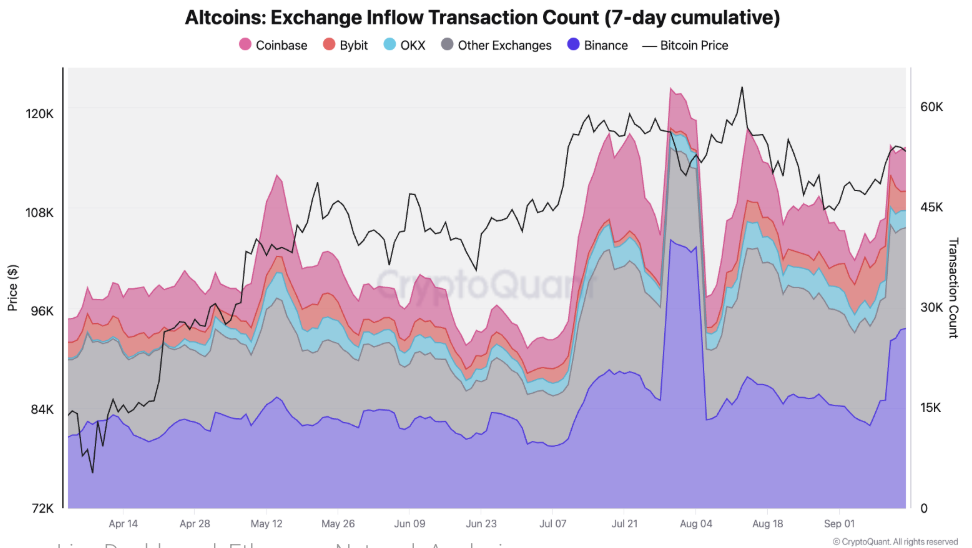
CryptoQuant anticipates that the increased inflow activity could lead altcoins to face relatively greater selling pressure in comparison to BTC and ETH.
Meanwhile, the stablecoin balance on exchanges—an important metric for forecasting potential buying pressure—has significantly increased. The report highlights that the exchange USDT balance rose from around $273 million in April to $379 million by August 31, reaching a new annual high.
CryptoQuant views this increase as indicative of investor optimism regarding a favorable monetary policy from the Fed. Depending on the Fed’s decision, these investors may transition from their current altcoin holdings to high-risk assets.
