

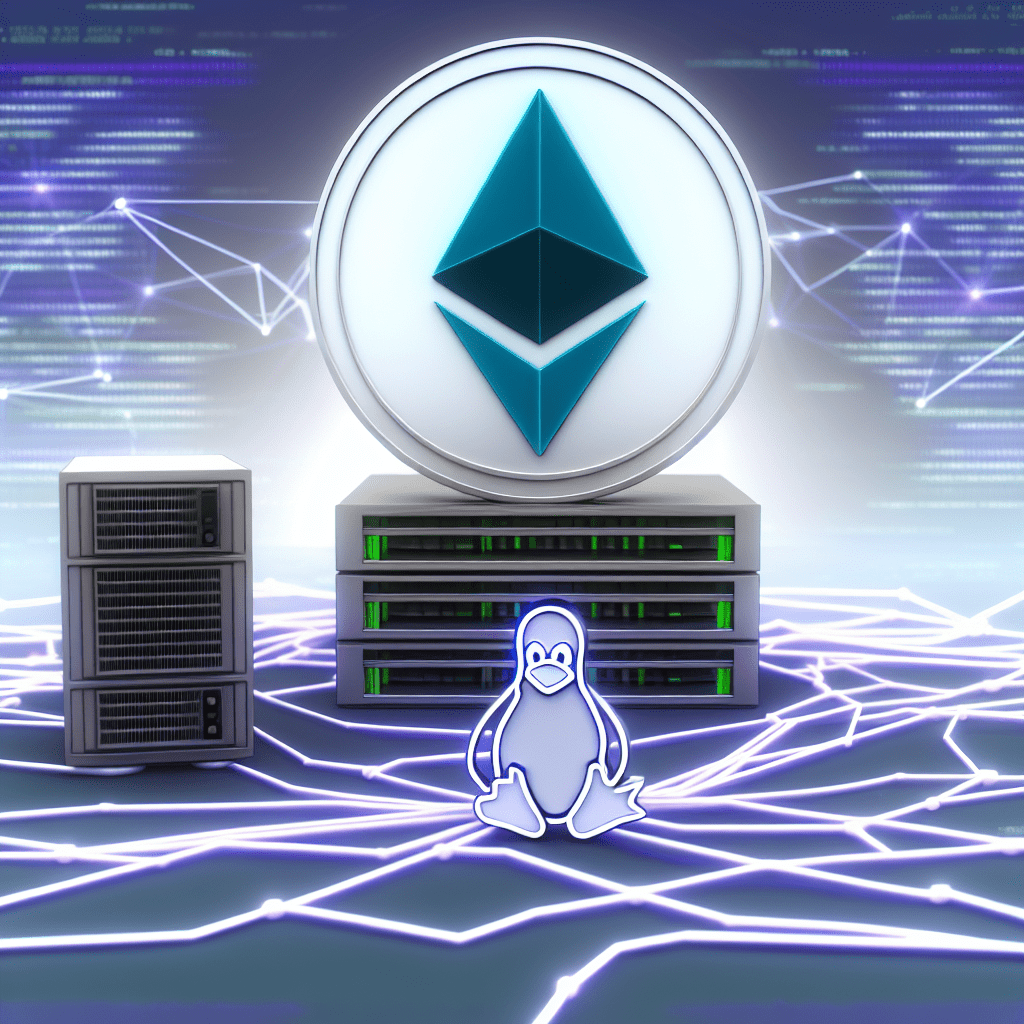
According to Ethereum co-founder Vitalik Buterin, the Ethereum network is a decentralized layer-1 blockchain for executing smart contracts, comparable to the open-source operating system Linux.
Both Linux and Ethereum are open source and feature customized implementations. Linux achieves this through developers creating custom software modifications, while Ethereum uses its layer-2 (L2) scaling networks, Buterin stated.
Buterin noted that Linux has provided value to “billions” of individuals, businesses, and governments “without compromising” its open-source ethos or decentralization, adding:
“We must ensure that Ethereum L1 serves as the financial, and eventually identity, social, and governance home for individuals and organizations seeking greater autonomy, while granting them access to the full power of the network without relying on intermediaries.”

This analogy emphasizes the Ethereum Foundation’s long-term vision of turning Ethereum into an operating system for the Internet, enabling distributed computation, value transfer, and consensus.
Related: Ethereum and Solana clash over what blockchain resilience really means
Ethereum has layer-2s for every flavor, but tension persists
As of now, there are 127 layer-2 networks within the Ethereum ecosystem, according to L2Beat.
Critics of Ethereum’s layer-2 scaling solutions argue that the numerous layer-2 networks compete with Ethereum and erode the base layer’s revenue, which fell following the Dencun upgrade in March 2024.

Supporters of Ethereum’s scaling strategy believe that the variety of layer-2 networks offers users flexibility and an improved user experience.
The modular scaling strategy potentially enables Ethereum to support many high-throughput chains built atop the base layer, as noted by Anurag Arjun, co-founder of Ethereum L2 Polygon, in an interview with Cointelegraph.
“The often-overlooked advantage of this rollup-centric roadmap architecture lies in its capacity for various teams to experiment with different execution environments and block times,” Arjun stated.
Nevertheless, an influx of high-throughput chains lacking true blockchain interoperability could result in greater ecosystem fragmentation, trapping user liquidity in isolated pools and detracting from user experience, Arjun warned.
Magazine: How Ethereum treasury companies could spark ‘DeFi Summer 2.0’
This interview has been edited and condensed for clarity.
