Indiana legislators are making a significant move to welcome bitcoin. A new bill aims to allow the state to invest in digital assets like Bitcoin via regulated funds while preventing local governments from imposing restrictions on crypto enterprises.
This initiative, known as House Bill 1042, signifies an increasing interest in cryptocurrency from both political and financial spheres. Digital assets, previously regarded as fringe, are now supported by prominent U.S. figures, including President Donald Trump, as well as major financial institutions.
Earlier this year, Congress also enacted its first significant crypto legislation.
Indiana is eager to join the crypto movement. Lawmakers prioritized an early hearing for HB 1042 even amidst redistricting discussions, showcasing its importance to Republican representatives.
“Digital assets are rapidly becoming a central part of daily finances, and Indiana should be prepared to engage responsibly,” stated bill sponsor Rep. Kyle Pierce, R-Anderson. “This legislation provides Hoosiers with additional investment options while implementing safeguards and exploring how blockchain technology can serve our communities better.”
A measured approach to bitcoin and crypto
The proposed legislation permits public investment funds to gain indirect exposure to digital assets, explicitly prohibiting direct crypto acquisitions.
Instead, it permits the use of cryptocurrency exchange-traded funds (ETFs), which monitor crypto prices and fall under federal regulatory oversight.
While ETFs offer greater stability than owning tokens, certain risks persist. The SEC has cautioned that crypto markets remain inadequately protected and are susceptible to fraud and manipulation.
This concern was echoed by Tony Green, deputy executive director of the Indiana Public Retirement System, who noted that while INPRS remains neutral on the proposed bill, it desires clear warnings regarding volatility and has observed minimal interest from members in crypto offerings.
According to the legislation, several key programs in Indiana will need to provide at least one crypto ETF option. This includes the 529 education savings plan, the Hoosier START plan, and retirement systems for educators, public workers, and lawmakers.
Other state funds will also be authorized to invest in crypto ETFs, with the state treasurer empowered to allocate assets into stablecoin ETFs as well.
Regulations and a task force
The proposal extends beyond just investments. It aims to limit how Indiana’s state agencies and local governments manage digital assets. Pierce emphasized the goal of equity, stating that the bill prohibits local regulations that target crypto operations, mining activities, or self-custody.
Additionally, the bill safeguards private keys as confidential information.
A Blockchain and Digital Assets Task Force would be established to investigate potential governmental and consumer applications of the technology and recommend pilot projects statewide.
Bitcoin’s national trend
Many states are increasingly considering crypto within pension funds and public accounts. This movement coincides with Bitcoin’s rising perception as a potential reserve asset for governments. Some federal proposals even suggest using Bitcoin reserves to counterbalance national debt.
Recently, Texas became the first U.S. state to purchase Bitcoin via a spot ETF, acquiring $5 million through BlackRock’s iShares Bitcoin Trust, as reported by Texas Blockchain Council President Lee Bratcher.
This purchase represents Texas’s inaugural action under its newly introduced Strategic Bitcoin Reserve, established by legislation signed in June.
Texas intends to eventually manage its BTC storage independently but opted for IBIT for the initial investment while the procurement process is underway. This acquisition highlights the growing interest from states and institutions in Bitcoin as a reserve asset.
Harvard University recently increased its IBIT investments to $442.8 million, while Emory University and Abu Dhabi’s Al Warda Investments have also raised their exposure.
Previously, Texas had considered a Bitcoin reserve proposal that advocated for cold storage, resident contributions, and annual audits.
Meanwhile, New Hampshire has approved a groundbreaking $100 million Bitcoin-backed municipal bond, making it the first of its kind globally, mandating that borrowers over-collateralize with BTC.
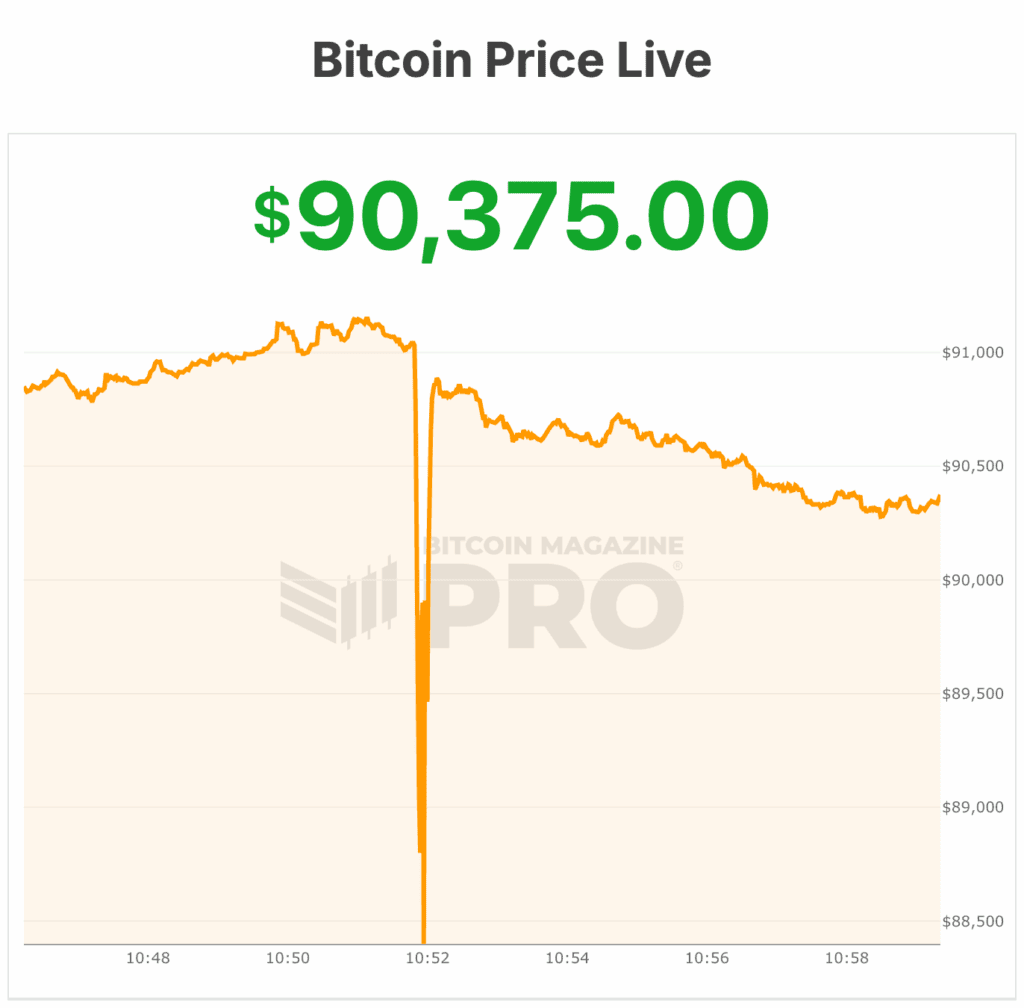
At the time of this writing, Bitcoin’s price is nearing $90,000.