

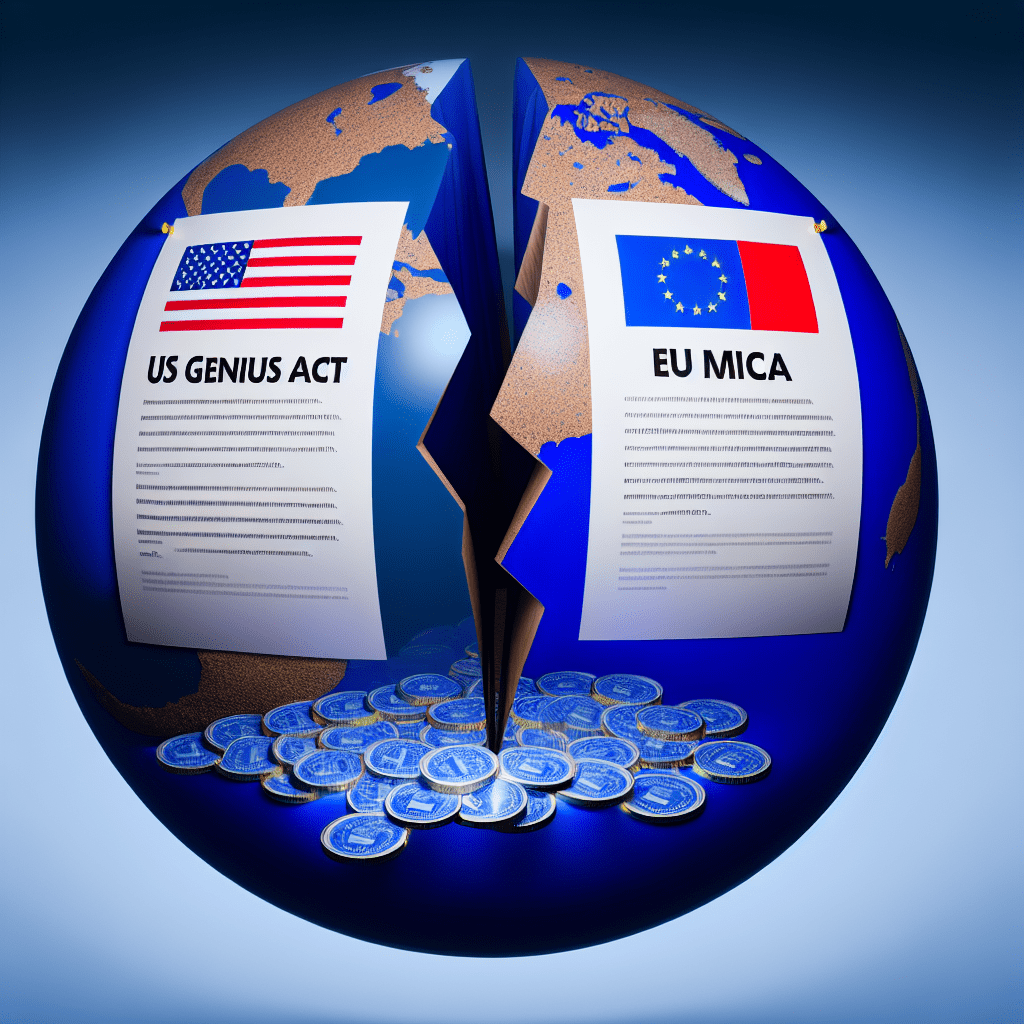
The new regulatory approach to stablecoins in the United States is transforming global liquidity movements and creating a notable divide with the European Union’s Markets in Crypto-Assets (MiCA) framework, effectively leading to separate liquidity pools for US and EU stablecoins, as outlined in a recent report by blockchain security firm CertiK.
The report indicates that the US digital asset market has entered a new era of regulatory clarity as of 2025, with federal legislation and administrative reforms now generally cohesive concerning the issuance, trading, and custody of digital assets.
Central to this change is the GENIUS Act, signed into law by US President Donald Trump in July, which introduces the first federal framework specifically for payment stablecoins. This law sets stringent reserve requirements, prohibits yield-bearing stablecoins, and formally incorporates stablecoin issuers into the US financial system.
While the framework offers much-needed regulatory assurance for US issuers, the report cautions that it also intensifies the global split with the EU’s MiCA framework, resulting in a “distinct liquidity pool” for the US and effectively splitting the global stablecoin market.
Consequently, CertiK anticipates that stablecoin liquidity will increasingly become segregated by jurisdiction, introducing new cross-border settlement hurdles and possibly facilitating regional stablecoin arbitrage.

Related: Crypto Biz: Corporate stablecoin race heats up with Citi, Western Union at the forefront
MiCA faces criticism over banking risk as US views stablecoins as statecraft
Although the EU’s MiCA framework parallels the US GENIUS Act in mandating full redemption at par and barring yield on stablecoins, it has faced backlash for introducing banking concentration risk, as the regulations require most issuer reserves to be maintained within EU-based banks.
Paolo Ardoino, CEO of Tether, expressed to Cointelegraph that this structure could create “systemic risks” for issuers, highlighting that banks commonly lend a substantial portion of their deposits under the fractional reserve system.
Others, such as Anastasija Plotnikova, founder of Fideum, have cautioned that MiCA’s provisions might accelerate industry consolidation, making it harder for smaller issuers to enter the market due to increased compliance and capital expenses.
Nevertheless, neither the GENIUS Act nor MiCA seems crafted to ensure global stablecoin fungibility. Instead, both frameworks prioritize regulatory supervision and financial stability, while the United States explicitly aims to reinforce dollar liquidity and the global prominence of the dollar.
This perspective was reiterated earlier this year by Treasury Secretary Scott Bessent, who remarked that the administration would adopt a cautious approach to stablecoin regulation, utilizing it as a mechanism to bolster US dollar supremacy.
“As President Trump has instructed, we are ensuring that the US [dollar] remains the leading reserve currency globally, and we will use stablecoins to facilitate that,” Bessent stated.
Magazine: China officially disapproves of stablecoins, DBS trades Bitcoin options: Asia Express
