

Disclosure: This article does not constitute investment advice. The content and materials presented on this page are intended for educational purposes only.
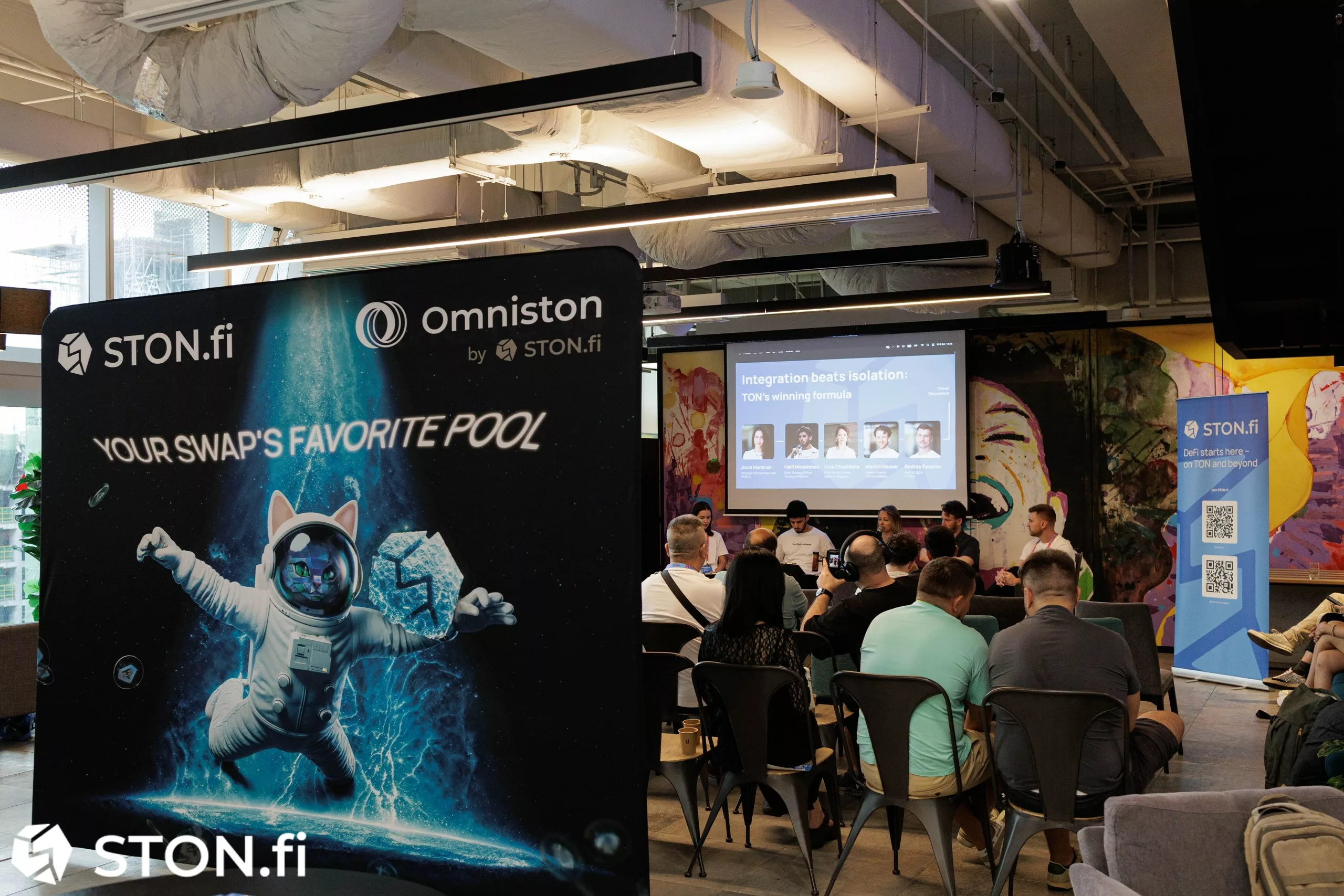
At TOKEN2049 Singapore, STON.fi Dev’s Andrey Fedorov discussed the influence of swaps, liquidity aggregation, and the Omniston protocol in transforming TON into a scalable blockchain ecosystem.
Summary
- STON.fi is developing infrastructure to expedite swaps on TON, making them fairer and more dependable, ensuring users experience seamless execution without fragmented liquidity.
- The Omniston protocol consolidates liquidity across TON, simplifying developer integration and improving user experience while promoting healthy rivalry among DEXs.
- With the swift scaling of TON through Telegram mini-app adoption, STON.fi is set to facilitate cross-chain liquidity and implement community-driven governance via a DAO.
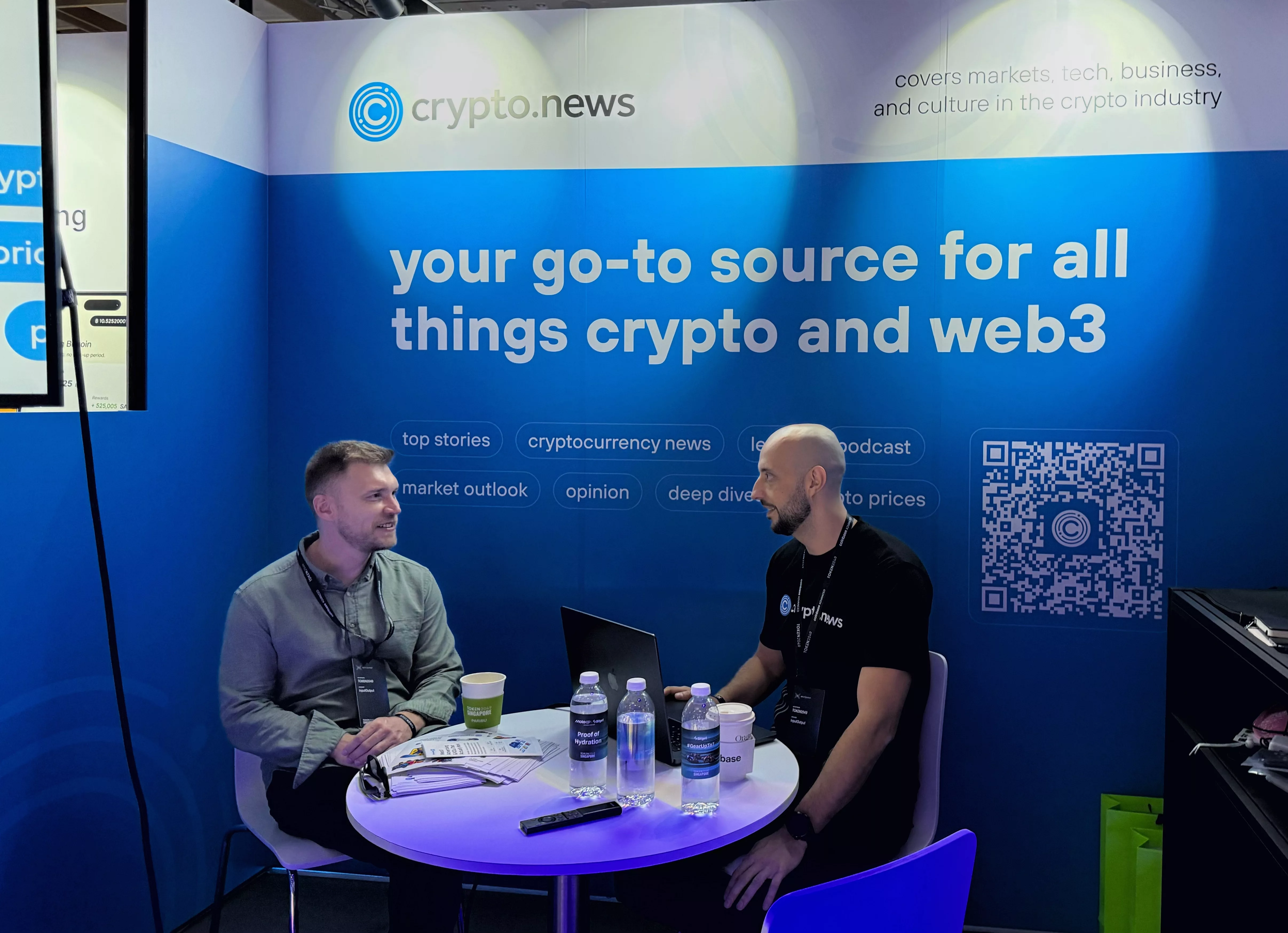
At TOKEN2049 in Singapore, we engaged with Andrey Fedorov, CMO and CBDO of STON.fi Dev, to discuss the future of infrastructure on the TON blockchain. With experience in developing user-centric financial products and fostering ecosystem growth, Fedorov provided insights on swaps, liquidity aggregation, and the significance of Omniston in enhancing TON’s scalability and developer-friendliness. Our discussion examined STON.fi’s pivotal role amid TON’s rapid expansion.
- For someone just discovering TON through Telegram, why should they care about infrastructure like swaps and liquidity aggregation, and what problem would they actually feel without it?
That’s an important question, as infrastructure often seems invisible. Here’s the reality: if you attempt to swap tokens and it takes ages, you receive a poor price, or the transaction fails, that’s when you notice it. Without robust infrastructure, the experience can quickly become frustrating. What we aim to create with STON.fi is the mechanism that prevents such issues. Ideally, users shouldn’t focus on what happens behind the curtain; they should just enjoy smooth swaps and fair pricing.
Moreover, there’s another pertinent aspect for the TON Blockchain: Telegram is renowned for its viral mini-apps and games, which often leave players with tokens. The immediate inquiry they have is, “Okay, I’ve got these tokens… now what? Can I trade them, use them, stake them?” If there is not dependable infrastructure facilitating the movement of those tokens, the excitement dissipates rapidly. Simply providing tokens is insufficient; users need a pathway into the broader ecosystem. That’s precisely the void STON.fi addresses.
This is also the rationale behind developing Omniston, a liquidity aggregation protocol. Users automatically receive optimal execution without needing to consider which DEX has the best pool today. Omniston connects everything, enabling people to use TON without concerns about liquidity locations. The goal is to minimize hassle, enhance reliability, and ensure that when someone’s first encounter with web3 comes via Telegram, they don’t get stalled; rather, they discover how effortless it is to continue.
- TON is scaling rapidly, but growth introduces both opportunities and unforeseen challenges. From your point of view, what’s the biggest shift you’ve observed in TON over the last year, and how does STON.fi fit that narrative?
The most significant shift has been TON transitioning from potential to demonstrating its capacity under pressure. A year ago, people were still questioning, “Is TON ready for actual traffic?” Then we had evidence: during large events like significant airdrops, transaction volumes surged nearly threefold overnight. It was both thrilling and chaotic.
For STON.fi, it was a valuable learning experience. Swaps slowed, queues formed, and execution became erratic. We paused swaps to safeguard users, then rebuilt: we added distributed routers, simplified transactions, and introduced automatic deadlines. That stress test evolved into the blueprint for a more robust system.
As a result, developers using our SDK can trust they are building on infrastructure that has already withstood rigorous trials. Even during traffic spikes, swaps continue to operate smoothly, and users needn’t hesitate. In a way, that chaos accelerated our resilience-building efforts, aligning STON.fi with TON’s growth narrative: transforming pressure moments into stronger foundations for the entire ecosystem.
- Everyone asks “TON vs. Ethereum/Solana.” A better question: how does TON’s architecture facilitate your work, and where does it constrain you?
TON has some notable advantages. First, its integration with Telegram provides projects like ours with immediate access to a billion users. This accelerates distribution and adoption as people don’t need to seek out our services; we’re right where they are.
Secondly, TON’s sharding is engineered for scalability, a considerable long-term advantage. However, it also presents challenges: under high load, interoperability across shards is complicated, so we need to factor this into our development and ensure effective use of the system. That’s why STON.fi developed solutions like distributed routers to maintain reliable swaps.
Lastly, there’s a supportive ecosystem in place. Projects on TON do not grow in isolation; we emphasize how they can mutually amplify each other. That’s why we prioritize strong partnerships, as collaboration significantly propels the entire ecosystem forward.
- Fragmented liquidity has been a major obstacle for blockchains, and TON is no exception. Beyond improved execution, what deeper impacts do you foresee Omniston having on developer adoption and ecosystem growth?
If you were a developer looking to incorporate swaps into your app, you’d essentially have to connect with every single DEX and protocol independently, which does not scale well.
With Omniston, you integrate once and immediately gain access to all available liquidity on TON. It simplifies life for developers, allowing them to concentrate on creating features instead of dealing with backend complications. That’s why over 40 projects have already implemented our solution.
The ripple effects are significant: users experience smoother applications, liquidity providers encounter increased activity, and the entire ecosystem appears more interconnected rather than fragmented. Ultimately, Omniston transcends just better execution; it aids in accelerating TON’s growth collectively and cohesively.
- Some critics might argue that aggregators diminish competition among DEXs. How do you perceive Omniston influencing innovation among liquidity providers?
I genuinely believe it encourages greater innovation. With Omniston, users automatically receive the best rates across all pools. Thus, if you’re a DEX or a professional market maker, you understand that winning order flow necessitates a competitive offering. In other words, it levels the playing field, eliminating reliance on being “the default.” Hence, I view it as a catalyst for healthy competition, motivating everyone to elevate their offerings.
- Cross-chain connectivity appears to be the next significant milestone. How do you envision external capital reshaping TON once it arrives, and what role will STON.fi play in facilitating that transition?
Once external capital starts flowing in, TON transforms from an isolated entity to an active participant in the broader crypto economy. That’s when excitement amplifies, bringing more liquidity, diverse trading pairs, and additional opportunities for users and developers alike. However, it also introduces complexity: bridging assets, routing trades across different chains, and managing associated risks.
This is precisely where STON.fi, particularly Omniston, becomes vital. The central concept behind Omniston isn’t solely about aggregating TON liquidity; it’s about evolving into a genuine cross-chain solution. Today, it makes all liquidity within TON feel interconnected. Tomorrow, it will extend that same simplicity across ecosystems. Whether moving tokens from Ethereum, Solana, or any other chain, it should feel as effortless as conducting a swap within TON.
Our goal is to make all that seamless. Users should never need to worry about liquidity location or the number of hops a transaction entails. A single click should suffice. That’s the mission of Omniston: to transform cross-chain interactions from a complicated process into a natural experience, thereby unlocking a significantly larger influx of capital and adoption for TON.
- Every major protocol eventually confronts governance considerations. Do you envision a future where STON.fi’s direction is more community-oriented?
Definitely. So far, we’ve been in the “build quickly, stabilize the foundation” phase, where it made sense for a core team to steer the ship. However, over the long haul, we believe protocols gain strength when they are directed by their communities. Community-driven governance isn’t solely about relinquishing control; it’s about cultivating more resilience, generating new ideas, and fostering trust.
That’s why we feel prepared to progress. This year, STON.fi will introduce its DAO. STON.fi has a dedicated community, and we want to involve them in the journey, not just as users, but as active contributors shaping the future of STON.fi. It’s about collective growth and ensuring the protocol is strengthened through community engagement.
Disclosure: This content is provided by a third party. Neither crypto.news nor the author of this article endorses any product mentioned on this page. Users should conduct their own research before taking any action related to the company.
